These Skin Rashes Are Signals Your Body Is Sending You
By the Editorial Staff
Published on August 31, 2026
Did you notice unusual redness this morning? Before dismissing it and thinking, “it’ll go away,” it is worth taking a closer look. Our skin is much more talkative than we sometimes realize. It reacts to what is happening around us and, in some situations, can also reflect what is happening inside the body. Changes in color, texture, sensitivity, or appearance can all provide useful clues that something deserves attention.
A rash does not automatically mean that something serious is wrong. Many skin changes are temporary and may disappear without causing lasting problems. Even so, the appearance of a rash should not always be ignored simply because it looks minor at first. Some rashes evolve over time, spreading to new areas, becoming more uncomfortable, or appearing together with symptoms such as fever, swelling, pain, or general illness.
The key is not to panic at every red patch, but to pay attention to how the skin is changing and whether anything else is happening at the same time. The location of the rash, how quickly it developed, whether it itches or hurts, and whether it is accompanied by other symptoms can all help determine how urgently it should be assessed.
When the Skin Speaks, It Is Best to Listen
Most skin rashes clear up on their own within a few days. Minor irritation can come and go, and many people occasionally experience redness, itching, or dry patches that improve without special treatment. What matters is recognizing when a rash does not follow that simple pattern.
Some rashes continue spreading instead of gradually settling down. Others change in color or texture, become painful, develop blisters, or occur alongside fever or swelling. These changes are important because they may suggest that the skin reaction is part of a larger problem rather than an isolated irritation.
A rapidly spreading rash accompanied by fever or facial swelling requires prompt medical attention. The combination of several symptoms is particularly important. A patch of redness on its own may have many possible explanations, but redness that rapidly expands while the person also develops fever, swelling, or feels increasingly unwell should not simply be watched indefinitely at home.
Facial swelling deserves particular attention because swelling around the face can occur during a significant allergic reaction. If swelling is accompanied by difficulty breathing, the situation should be treated as an emergency rather than waiting to see whether the rash improves on its own.
Pain is another useful signal. Many common rashes are primarily itchy, dry, or irritating. A rash that is distinctly painful, especially when small blisters appear, can point toward a different type of skin problem.
Painful Blisters and Shingles
Painful patches with small blisters may indicate shingles, which is caused by a reactivation of the virus responsible for chickenpox. The appearance can vary, but pain and grouped blisters are important clues that distinguish shingles from many ordinary forms of irritation.
The discomfort may be more noticeable than the appearance of the rash itself. For some people, the affected area may feel sensitive, sore, or painful before the blisters become fully obvious. Once the eruption appears, paying attention to how quickly it develops and where it is located can help when discussing the symptoms with a healthcare professional.
Timing matters. Treatment started within the first 72 hours can make a meaningful difference, which is why a painful blistering rash should not be ignored while waiting several days to see what happens. Prompt evaluation allows a healthcare professional to determine whether shingles is actually responsible and whether treatment is appropriate.
The Most Common Eruptions to Identify
Several common skin conditions have recognizable patterns. Knowing the general appearance of these conditions can make it easier to understand what you are seeing, although appearance alone is not always enough to make a definite diagnosis.
When observing a rash, it can help to notice a few basic features: whether the skin is dry or moist, whether the area is flat or raised, whether there are scales or blisters, whether the rash forms a clear shape, and whether itching or pain is the dominant symptom. These details can make a description much more useful if medical advice becomes necessary.
Eczema
Eczema affects a large number of people in France. It usually manifests as dry, irritated, and very uncomfortable patches of skin. The affected areas may feel rough, sensitive, or intensely itchy, and repeated scratching can make the discomfort more difficult to manage.
Dryness is an important part of the condition, which is why regular moisturizing plays such a central role in everyday care. Keeping the skin moisturized can help support the skin barrier and reduce the uncomfortable feeling associated with excessive dryness.
Avoiding known triggers is also helpful for limiting flare-ups. If someone already knows that certain situations or exposures tend to make their eczema worse, reducing contact with those triggers can form part of a practical long-term routine.
Consistency is often more helpful than waiting until the skin becomes extremely uncomfortable. Regular attention to dryness and irritation can make it easier to notice when the skin begins changing rather than only reacting once a flare-up has become severe.
Psoriasis
Psoriasis has a different appearance. It typically forms thick plaques covered with silvery scales. These plaques are often found on the elbows, knees, or scalp, although the way the condition presents can differ from person to person.
The thicker, scaly texture is one of the characteristics that separates psoriasis from a simple area of temporary redness or dryness. Instead of appearing as a brief irritation that disappears quickly, psoriasis is a chronic condition.
It is important to remember that psoriasis is not contagious. Someone cannot catch it from touching a person who has psoriasis or from being near the affected skin.
Because it is chronic, psoriasis benefits from appropriate medical monitoring. The objective is not simply to wait for every visible plaque to disappear on its own, but to manage the condition in a way that is appropriate for the individual and to seek professional guidance when symptoms change or become difficult to control.
Hives
Hives are recognizable as raised, intensely itchy welts that can sometimes appear within minutes. Their sudden appearance can be alarming, particularly when several areas develop at once.
They are often linked to an allergic reaction. The welts themselves may be uncomfortable, but what matters most is whether other symptoms appear at the same time.
Facial swelling is an important warning sign. Difficulty breathing is even more urgent. If hives are accompanied by facial swelling or difficulty breathing, immediate medical attention is necessary. This is not a situation in which someone should simply wait for the skin changes to fade.
When hives appear without those emergency symptoms, it can still be useful to remember what happened shortly before the rash developed. The timing may provide useful context when the reaction is later discussed with a doctor.
Ringworm
Despite its somewhat misleading name, ringworm has nothing to do with a worm. It is a fungal infection that forms a characteristic round patch on the skin.
The shape is one reason people may notice it quickly. Instead of producing an undefined area of redness, the infection tends to create a recognizable circular pattern. Even so, not every round rash is automatically ringworm, so persistent or uncertain skin changes may still need professional assessment.
Antifungal treatments are generally very effective. Correctly identifying the fungal nature of the problem is important because treating an infection appropriately is different from caring for simple dryness, irritation, or another type of rash.
These examples show why the word “rash” covers many very different skin changes. Eczema, psoriasis, hives, and ringworm may all affect the skin, but their typical appearance, sensations, causes, and management are not the same.
Signals That Should Definitely Not Be Ignored
Some skin changes deserve more urgent attention than the common rashes described above. In these cases, the appearance of the rash itself can provide an important warning that something more significant may be happening.
The speed of change is particularly useful to observe. A mark that remains stable is different from redness that expands noticeably over a short period. Likewise, a rash that suddenly becomes painful, swollen, blistered, or accompanied by fever should be taken more seriously than a mild patch that is steadily improving.
Red or Purplish Spots That Do Not Blanch
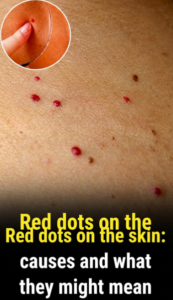
Small purplish or red spots that do not blanch when pressed may indicate bleeding beneath the skin. “Blanching” means that redness temporarily becomes paler when gentle pressure is applied. When spots remain red or purple instead of fading under pressure, that difference can be significant.
This type of sign requires prompt medical attention. It is especially important not to dismiss an unusual cluster of non-blanching spots simply because the individual marks are small. The size of a skin lesion does not necessarily determine its importance.
Infectious Cellulitis
Infectious cellulitis should not be confused with the cosmetic use of the word cellulite to describe dimpled or orange-peel-looking skin. These are entirely different things.
Infectious cellulitis causes an area of redness that is typically hot, swollen, and tender. Instead of being merely visible, the area may feel noticeably warmer and more painful than the surrounding skin.
Another important feature is that it can develop quickly. Redness that continues expanding while becoming hotter, more swollen, or increasingly tender should not be treated as an ordinary cosmetic skin change.
A Bull’s-Eye Rash After a Tick Bite
A bull’s-eye rash that develops after a tick bite is a classic sign associated with Lyme disease. The recognizable pattern consists of an area of redness that develops into a target-like or bull’s-eye appearance.
Context is essential here. A circular-looking rash can have more than one possible cause, but when that appearance follows a tick bite, the combination is particularly important and should be discussed promptly with a healthcare professional.
Early antibiotic treatment is essential for avoiding complications. For that reason, noticing and acting on the rash early is more useful than waiting until additional symptoms develop.
Rashes After Starting Medication
Medication is another important consideration whenever a new rash appears. Some treatments can trigger skin reactions, and while some reactions may be limited, others can be severe.
If a rash develops after starting a new medication, the timing should not be ignored. Make note of when the medication was started and when the skin changes first appeared, because that information can be useful when the reaction is evaluated.
Any rash that appears after taking a new medication should be reported to a doctor. This is particularly important when the rash is spreading or is accompanied by other new symptoms.
Pay Attention to the Whole Picture
One of the easiest mistakes to make is focusing only on the appearance of the skin. A rash is more informative when considered together with everything else the body is doing.
- Notice whether the rash is spreading or remaining in the same area.
- Pay attention to whether itching, pain, heat, swelling, or tenderness is present.
- Observe whether blisters, sores, scales, or unusual spots develop.
- Consider whether fever or facial swelling appears at the same time.
- Remember whether the rash followed a tick bite or the start of a new medication.
- Watch whether the skin is clearly improving or continuing to worsen over several days.
These observations do not replace a diagnosis, but they can help you recognize when a skin problem is behaving differently from a mild, short-lived irritation.
Situations That Require Prompt Medical Attention
Some simple points are worth keeping in mind whenever an unexplained rash appears. The appearance of the skin matters, but the speed of progression and the presence of other symptoms often matter just as much.
Seek medical attention promptly if the rash spreads very quickly, if it is accompanied by fever, if blisters or sores appear, or if no improvement is visible after several days.
Facial swelling or difficulty breathing alongside hives or another rash requires especially urgent attention. Similarly, painful blistering skin, rapidly developing hot and swollen redness, non-blanching red or purple spots, or a bull’s-eye rash following a tick bite should not simply be ignored.
When Watching and Waiting Is Not Enough
Many people naturally want to give a mild skin irritation a little time to settle. In some situations that may be reasonable, particularly when the rash is minor and already improving. The important distinction is whether the condition is actually getting better.
If each day brings more redness, more discomfort, additional areas of rash, new blisters, or other symptoms, the situation is moving in the wrong direction. That progression is itself useful information.
Similarly, a rash that remains unexplained and shows no visible improvement after several days deserves more attention than one that is steadily fading. Monitoring a skin change means watching its direction, not simply waiting for time to pass.
Learning to Recognize What Your Skin Is Telling You
The skin is our largest organ and often one of the first places where visible changes become noticeable. That does not mean every blemish or patch of redness signals an internal illness, but it does mean that unusual changes can provide useful clues.
Learning to observe your skin means becoming familiar with what is normal for you and noticing when something looks or feels distinctly different. Color, texture, shape, tenderness, itching, swelling, and the speed at which a rash changes are all details worth paying attention to.
Key Signs to Remember
- A rapidly spreading rash deserves attention, particularly when other symptoms are present.
- Fever or facial swelling together with a rash can signal a more urgent problem.
- Painful patches with small blisters may be consistent with shingles and should be assessed promptly.
- Raised, intensely itchy hives become an emergency concern when facial swelling or breathing difficulty occurs.
- Hot, swollen, tender redness can indicate infectious cellulitis.
- Red or purple spots that do not blanch when pressed require prompt medical assessment.
- A bull’s-eye rash after a tick bite can be an important sign of Lyme disease.
- A new rash following a new medication should be reported to a doctor.
- A rash that fails to improve after several days should not simply be forgotten.
Taking Care of Your Skin Means Paying Attention
Taking care of your skin is not limited to moisturizing it or treating visible irritation. It also means noticing changes and responding appropriately when something unusual appears.
When a rash develops, look at more than just its color. Consider how quickly it appeared, whether it is spreading, how it feels, and whether you have any other symptoms. Those simple observations can make it easier to decide whether the skin can be monitored for improvement or whether professional medical advice is needed.
Most importantly, do not ignore warning signs simply because a rash initially appears small or harmless. Skin conditions can look similar at first, and the way a rash evolves can sometimes be as informative as the way it looked when it first appeared.
The skin is often one of our best visible allies for noticing that something in the body deserves attention. Learning to really listen to it means recognizing ordinary changes while also knowing when a symptom has crossed the line from something to watch into something that should be medically assessed.
Taking care of your skin is also taking care of yourself, and that starts with learning to pay attention to what your body is showing you.