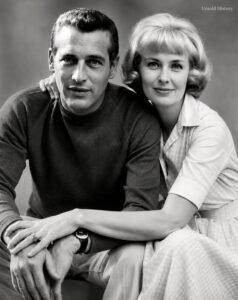
When Paul Newman walked into the memory care facility on a crisp May morning in 2007, the world outside seemed oblivious to the quiet drama unfolding within. The air smelled faintly of disinfectant and flowers, a subtle but constant reminder that this was a place of care, of endings and beginnings intertwined. For most, it was another day. For Paul, it was another chance to honor a love that had lasted decades.
Joanne Woodward sat by the window, the bare trees stretching like brittle fingers against the gray sky. She didn’t notice him at first. A nurse whispered a warning: today might be one of the days she wouldn’t remember him. Paul simply nodded, as though he had rehearsed for this moment hundreds of times. He didn’t need words; he had learned that love was sometimes quieter than conversation.
He eased into the chair beside her, careful not to startle her. Their eyes met briefly, and though there was no recognition, there was a faint spark, a silent acknowledgment that this was not a stranger sitting beside her.
“Can I help you?” Joanne asked, her voice soft but polite, laced with a hint of guarded curiosity. She did not remember his name. She did not remember the life they had shared. Yet Paul smiled, undeterred.
“You already have,” he replied.
She looked puzzled. The words meant little, yet they carried the weight of decades of devotion. Paul didn’t explain. Instead, he reached into his coat pocket and produced a worn book—the kind with creased pages and a spine softened by years of handling. The Collected Stories of Eudora Welty. One of Joanne’s favorites. He began reading aloud, his voice steady, warm, and familiar.
Slowly, the tension in her shoulders eased. She didn’t remember his name, but somehow, she recognized the cadence, the tone, the life in his voice. That morning became one of many. Paul Newman would show up day after day, sometimes to be met with a smile, sometimes to silence. Always, he returned.

The Love That Time Could Not Diminish
By the mid-2000s, Joanne’s Alzheimer’s had progressed steadily. Diagnosed in her mid-70s, she retreated slowly from the world around her. Names, faces, memories—they all blurred and faded. Yet Paul Newman, the Hollywood icon, the racing enthusiast, the philanthropist, transformed into something entirely different. Not a star, not a celebrity, but a steadfast caretaker.
He read to her. He brought flowers. He told small jokes that would elicit the faintest chuckle. Sometimes she called him “the nice man who reads.” Other days, she called him nothing at all. And yet, he kept returning.
Their story began decades earlier in the hallowed halls of the Actors Studio in the 1950s. Joanne Woodward, already disciplined and focused, was gaining recognition on Broadway. Paul Newman, handsome and still finding his footing in the world of acting, was married at the time. Their paths intersected through sheer gravity—the pull of two creative souls seeking authenticity in a world full of pretense.
She challenged him immediately—not just as a fellow actor, but as a person. Theirs was a slow-burning romance, cultivated through shared rehearsals, long conversations, and mutual respect. By 1958, they were married, and their partnership became a foundation for everything else: a home in Westport, philanthropic ventures like the Hole in the Wall Gang Camp, and a life together where Hollywood never eclipsed their connection.
A Partnership Beyond the Spotlight
Paul Newman’s fame often overshadowed the quiet details of his character, yet Joanne saw beyond the blue eyes and effortless charm. She witnessed his drive to be better, to surpass the superficial, to embrace meaningful work. “She’s the best thing that ever happened to me,” he said repeatedly, never dramatically, never theatrically—just with the simple honesty that defined their life together.
Their marriage was not without its challenges. Paul struggled with alcohol for years, navigating the difficult terrain of fame and personal demons. Seasons of silence and distance punctuated their decades-long journey. But Joanne never sought to control or dominate. She steadied him, grounding the man who could have easily been lost to the allure of celebrity.
Together, they created a space where love was measured not in grand gestures or public declarations, but in the quiet constancy of presence. Friends noted how Joanne’s calm strength allowed Paul to evolve into the activist, philanthropist, and artist he became. When the cameras faded and the red carpets disappeared, their life was private, intimate, and enduring.

The Quiet Heroism of Care
As years passed, Paul Newman’s own life slowed. Acting became less central. Instead, he devoted himself to the joys that had always mattered—cooking, racing, reading, and most importantly, nurturing his family. But then Joanne’s memory began to fade, and the roles reversed. The man who had once navigated Hollywood’s glare now stepped into a quieter, humbler role: caregiver.
Paul rarely discussed Joanne’s illness publicly. When asked, he spoke softly, almost reverently: “She’s still here. Even when she isn’t.” These words, spoken at a fundraiser, resonated far beyond the room. They encapsulated the essence of their love: present, patient, unwavering.
Each morning, he arrived. Each morning, he sat by her side, reading stories, sharing memories, and offering small tokens of companionship. Sometimes she remembered. Sometimes she did not. Yet the act itself—the constancy, the ritual—spoke volumes.
Love, Paul demonstrated, was not contingent on recognition. It was not a matter of memory or return. It was the simple act of showing up, day after day, even when the world outside demanded spectacle.
Life Before the Care Facility
To understand the depth of this devotion, one must step back to the beginnings of their partnership. Joanne and Paul’s love story was rooted in mutual respect and shared ambition. They married young, built a life together, and embraced challenges as a team.
Westport, Connecticut, became their sanctuary. Away from the Hollywood limelight, they nurtured a family and engaged in philanthropy. The Hole in the Wall Gang Camp, founded for seriously ill children, reflected their shared values: compassion, empathy, and a desire to make tangible differences in the lives of others.
Paul’s charm drew attention, yet he consistently credited Joanne for shaping his life. While Hollywood celebrated his looks and charisma, she nurtured his character. Their love was not performative; it was functional, meaningful, and sustaining.
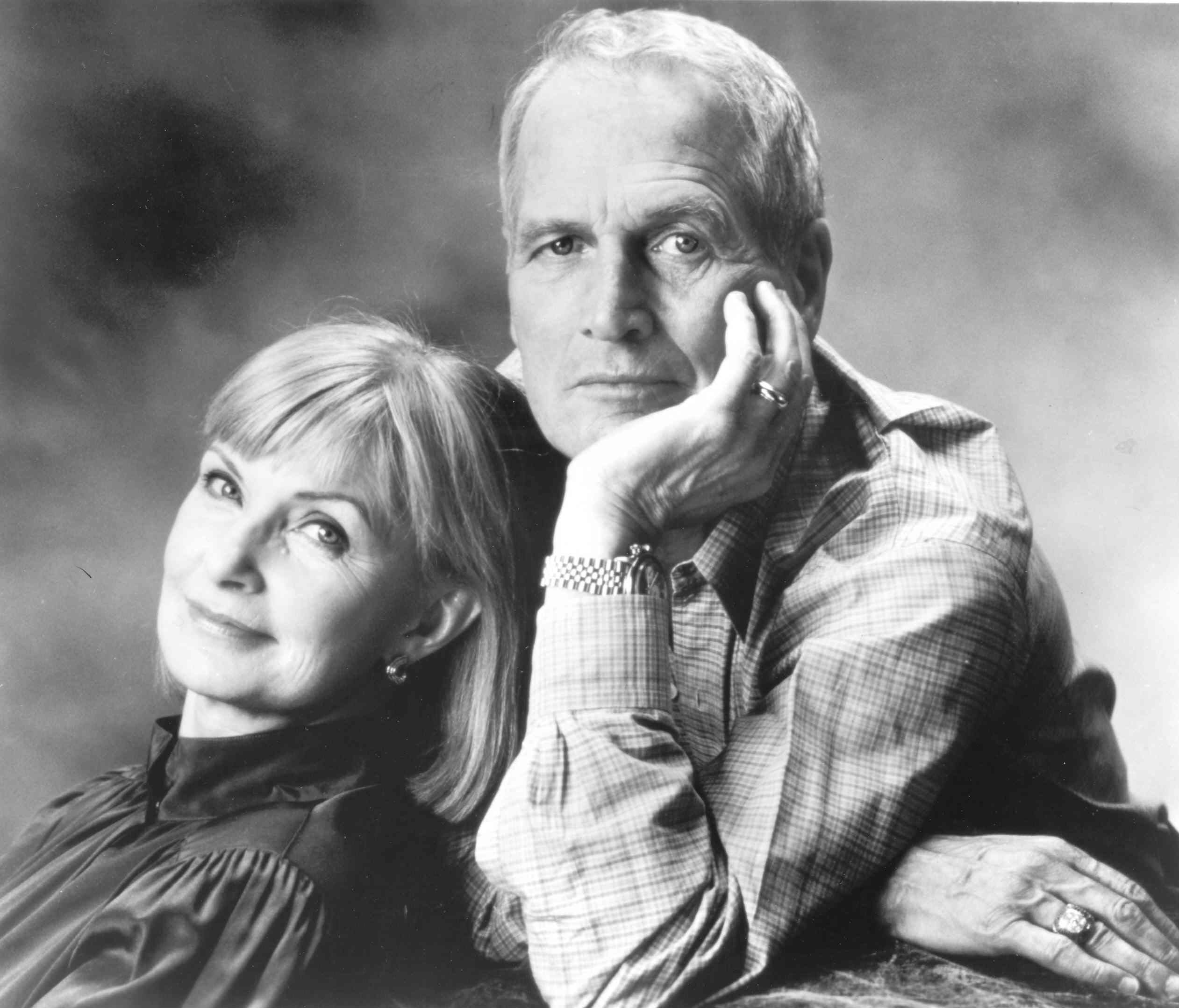
Challenges That Tested Their Bond
Even decades into their marriage, they faced hardships. Paul’s struggles with alcohol were met with patient understanding, not judgment. They navigated career pressures, fame, and personal loss with a steady hand. Joanne’s own career demanded attention, and Paul respected her autonomy.
Their partnership was built on trust. Friends often remarked that the strength of their union lay in their refusal to “keep score.” They understood that love was a practice, not a competition. They stayed in the room for each other—through laughter, through hardship, through silence.
The Final Act of Love
In the later years, as Joanne’s Alzheimer’s progressed, Paul’s commitment intensified. Acting and racing became secondary; his primary role was to be present for the woman who had shared his life for decades.
He read to her daily. He brought flowers. He offered gentle humor. Sometimes she recognized him, sometimes not. The ritual mattered more than the acknowledgment.
When Paul Newman passed away in 2008, Joanne’s understanding of his absence was inconsistent. Some days, she asked when he would come home. Other days, she believed he had already visited. Their daughters never corrected her, allowing the memory to exist unchallenged, a testament to the gentleness and patience that had always characterized their family life.
Lessons from a Lifelong Partnership
Paul and Joanne’s story is more than celebrity lore; it is a masterclass in enduring love, patience, and dedication. It reminds us that the deepest forms of love are often unseen, quiet, and uncelebrated.
They demonstrated that love can thrive even when memory fails. That partnership is sustained not by grand gestures, but by daily acts of presence. That commitment is measured not in recognition or acknowledgment, but in constancy and fidelity to the shared life built together.
Paul’s words, simple and unadorned, captured this ethos: “We don’t keep score.” Joanne’s affirmation, equally quiet and profound, echoed: “We stay in the room.”
Even as memory fades, the act of staying present—the daily affirmation of devotion—remains an enduring testament to the human capacity for love and connection.

The Enduring Legacy of Paul and Joanne
Today, the story of Paul Newman and Joanne Woodward serves as an enduring reminder that love is not defined by accolades or public recognition. It is defined by commitment, by presence, by the courage to continue showing up even when the world and the mind of a loved one seems to drift away.
From Broadway stages to Hollywood screens, from philanthropic endeavors to quiet mornings in a memory care facility, their life together exemplifies the quiet heroism of everyday love. It teaches us that the ultimate act of love is sometimes the simplest: staying in the room, even when the room no longer remembers you.
For those who seek inspiration, for those navigating the complexities of aging, illness, or long-term commitment, Paul and Joanne’s story is a blueprint. It is a call to value presence over performance, constancy over convenience, and love over self-interest.
Joanne may not have remembered his name, but she recognized his voice. She may not have recalled the decades they shared, but she felt the warmth of his dedication. Paul Newman’s love for Joanne Woodward was not contingent on memory, on recognition, or even on the world’s approval. It was a quiet, steadfast presence, a daily choice to honor the woman who had transformed his life.
In a world often enamored with spectacle and grand declarations, their story reminds us of a higher, quieter, and infinitely more profound truth: love is an act. And the greatest act of all is simply staying in the room.