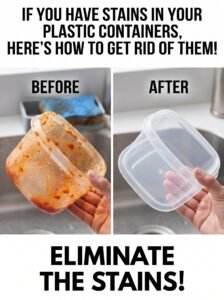
Plastic containers can lose their clear, clean look after holding sauces, spices, or brightly colored foods.
Tomato sauce, curry, and other strongly pigmented leftovers often leave stains that regular washing does not remove easily.
A simple cleaning trick, popularized on TikTok by user FacesbyAdi, has drawn attention because it uses everyday products and takes only about a minute.
The method is quick, inexpensive, and easy to try at home.
To test it, pour warm water into the stained container.
Add a small amount of dish soap, then place a sheet of paper towel inside.
Close the container securely and shake it vigorously for about one minute.
After that, empty the mixture, rinse the container, and check whether the plastic has regained some of its original shine.
The idea behind the trick relies on three cleaning actions working together.
Warm water helps loosen greasy deposits and soften food residue.
Dish soap is designed to break down fat and lift oily stains.
The shaking creates a strong mechanical washing effect, allowing the soapy water and paper towel to move rapidly against the inside of the container.
The role of the paper towel is less certain.
Some people believe it helps absorb loosened residue, but this has not been scientifically proven.
Although videos of the method often show impressive results, some viewers have questioned whether the demonstrations are always reliable.
A few suspect that containers may have been switched during filming to make the effect look more dramatic.
In practice, this trick appears most useful for fresh or light stains.
For older, deeply set marks, stronger traditional methods may be needed.
You can soak the container overnight in warm water mixed with baking soda, place the plastic in natural sunlight to take advantage of its whitening effect, or use vinegar or citric acid to help dissolve mineral deposits.
For recent stains, the warm water, dish soap, and paper towel method is worth trying.
It is simple, low-cost, and uses products most people already have at home.
For stubborn, ingrained discoloration, longer soaking or other cleaning methods may give better results.