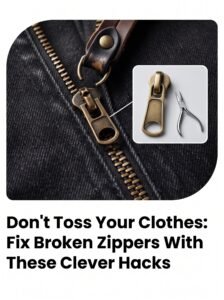
Is your jacket, bag, suitcase, or camping gear out of use because of a stuck or damaged zipper? Do not panic. With a few simple tools and everyday products, you can often bring a stubborn closure back to life without replacing the entire item.
Replace a Faulty Slider on a Bag
A loose or broken slider does not mean the end of your favorite bag. Start by gently removing the old slider. Use a seam ripper or thin scissors to cut the upper stitches carefully, without damaging the surrounding fabric.
Once the old slider is removed, insert the new one from above. Check that it is facing outward and positioned correctly before pulling it down over the teeth.
To secure everything, add a zipper stop or make a few reinforced stitches with strong thread. Once the slider moves smoothly again, your bag is ready to return to service.
Unlock a Stubborn Tent Zipper
When a tent zipper refuses to cooperate, you do not always need to replace the whole closure. Begin by carefully removing the lower stop.
Slide a new slider onto the zipper, making sure the teeth are perfectly aligned inside the guides. If the teeth are not seated correctly, the zipper may separate or jam again.
After the slider is in place, replace the stop and test the zipper several times. This quick repair can save your tent before your next outdoor trip.
Bring Worn Zipper Teeth Back to Life
When a zipper becomes hard to move, lubrication may be enough to solve the problem. Apply candle wax, dry soap, or a small amount of petroleum jelly to the teeth.
Use a cotton swab for better control, especially on bags, jackets, or suitcases where excess product could stain nearby fabric. Move the slider slowly back and forth to distribute the lubricant.
These simple products help the teeth glide more smoothly and can extend the life of the zipper.
Adapt a Zipper That Is Too Long
A zipper that is too long can often be adjusted. Cut the excess length at the base, then remove the unnecessary teeth or spiral section.
Once the zipper has been shortened, fix a new stop at the end. You can also create a solid stitched stop with strong thread.
This discreet modification can make an oversized zipper fit properly and give your accessory a cleaner finish.
Modify a Molded Tooth Zipper Carefully
Rigid plastic molded tooth zippers require extra care. Remove the excess teeth with a suitable clamp, working slowly so you do not damage the zipper tape.
After removing the extra teeth, attach a new stop just after the last preserved tooth. This precise repair can save many accessories that might otherwise seem unusable.
Repair Nylon Spiral Zippers
Flexible nylon spiral zippers need a different approach from molded plastic zippers. After cutting the ends cleanly, position the upper stops carefully with a clamp.
Make sure the stops are secure before testing the slider. Because spiral zippers are more delicate, avoid forcing the cursor if it catches.
With careful handling, this method can restore function to lightweight bags, clothing, and flexible gear.
Fix Missing Teeth at the Base
If teeth are missing at the bottom of the zipper, the closure may still be repairable. Remove the old stop and replace it with a wider stop positioned above the damaged area.
This helps the slider avoid the broken section. For a longer-lasting result, reinforce the area with a few stitches.
The repair will not make the missing teeth reappear, but it can keep the zipper functional and prevent the damage from spreading.
Create an Emergency Pull for a Broken Zipper
When the zipper pull breaks, a paperclip or key ring can serve as a quick temporary fix. Insert it through the eyelet on the slider to create a new handle.
This solution takes only seconds and can help you keep using a jacket, suitcase, or bag until you can make a more permanent repair.
Loosen a Blocked Zipper
For a blocked zipper, rub the teeth with a pencil. The graphite acts as a lubricant and can help the slider move again.
You can also apply a mixture of water and dishwashing liquid. Let it sit for a few minutes, then try to move the slider gently.
Avoid pulling too hard. Forcing the zipper can bend the slider, damage the teeth, or make the blockage worse.
Try Washing as a Last Resort
If nothing else works, washing the item may remove stubborn dirt, dust, or residue trapped in the zipper. Use the appropriate washing method for the item and let it dry completely.
After drying, apply a suitable lubricant to help the teeth glide smoothly again.
These simple techniques can significantly extend the life of your favorite items. They can save money, reduce waste, and help you build practical repair skills. With a few basic tools and a little patience, many defective zippers can get a second chance.