
It was supposed to be routine television.
Another morning on The View. Another high-profile guest. Another controlled exchange of perspectives packaged neatly between commercial breaks.
And then the control evaporated.
When Stevie Nicks walked onto that set, she didn’t arrive with visible tension. She carried the familiar calm of someone who has survived decades in an industry that chews up artists for sport. She smiled politely. She greeted the panel. She sat down.
No one in the control room anticipated what would follow.
Because what unfolded wasn’t a shouting match. It wasn’t a meltdown. It wasn’t chaos in the conventional television sense.
It was something far more dangerous.
It was composure.
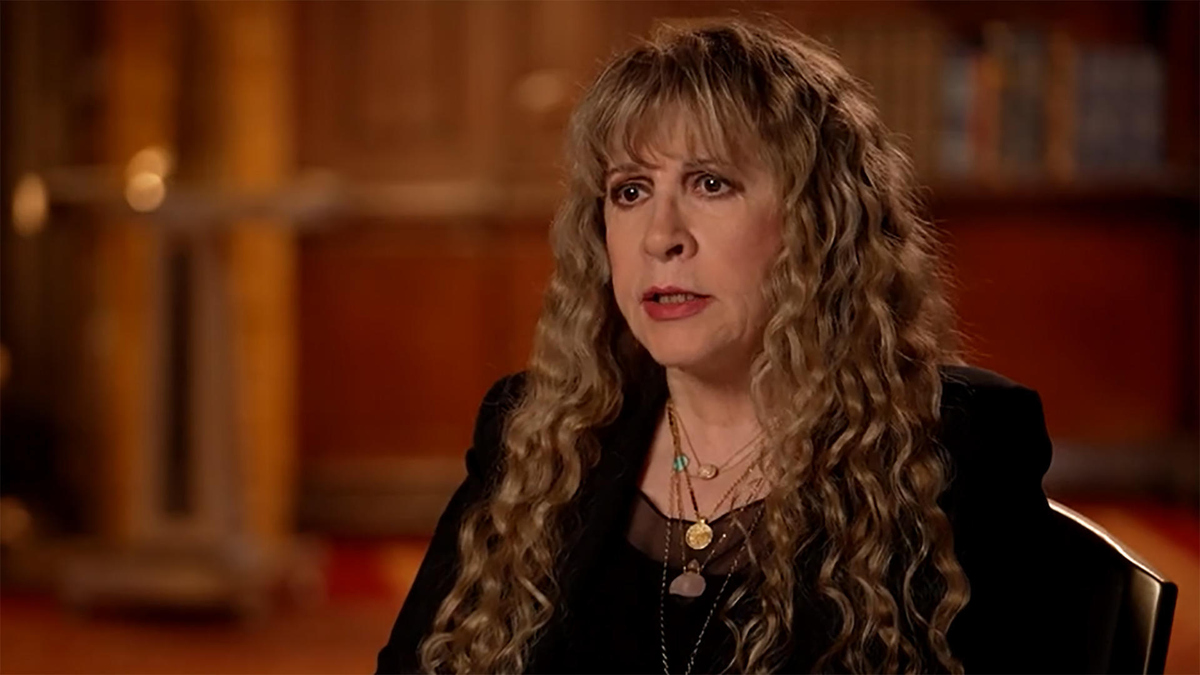
A Lifetime of Not Shrinking
To understand that moment, you have to understand Stevie Nicks.
She is not simply a guest star. She is not a promotional stop on a press tour. She is a woman who walked into rock and roll in platform boots and chiffon, in a world that preferred its women quiet, compliant, and grateful.
From her early days in Fleetwood Mac, she learned quickly that success did not shield women from dismissal. If anything, it intensified it. She was called mystical. Dramatic. Emotional. Difficult. Moody. Overly sensitive.
Rarely brilliant.
Rarely authoritative.
Rarely strategic.
For decades, she endured the subtle choreography of being interrupted, second-guessed, talked over. She survived the industry’s obsession with framing strong women as “temperamental.”
And she did something radical.
She refused to shrink.
So when she leaned forward on that set — calm, direct, deliberate — it wasn’t the beginning of something explosive.
It was the continuation of something consistent.
The Moment It Shifted
The conversation had begun conventionally enough. A discussion about public discourse. About responsibility. About expression in media. About who gets to define the tone of conversation.
Then came the pivot.
A comment — sharp, dismissive, framed as corrective — suggested that certain public figures were “performing emotion” rather than contributing constructively. The implication hung in the air.
The room felt it shift.
Stevie didn’t interrupt immediately.
She listened.
And then she spoke.
“Listen carefully,” she said — not loudly, not theatrically — but with the precision of someone who has measured her words for years.
“You don’t get to sit in a position of power, call yourself a voice for real people, and then immediately dismiss any woman who doesn’t fit your version of how she should speak, live, or express emotion.”
There was no screaming.
There was no spectacle.
But the temperature in that studio rose instantly.
Why It Landed So Hard
Daytime television thrives on rhythm — interruption, banter, pushback, resolution. It’s a dance.
But what happened in that moment disrupted the choreography.
Because this wasn’t about politics.
It wasn’t about policy.
It was about authority — and who gets to define acceptable expression.
When Whoopi responded — reminding the audience that this was a talk show, not a performance stage — it carried the weight of institutional control. The rules. The structure. The boundaries.
And Stevie’s reply sliced clean through it.
“No. This is your safe space. And you can’t handle it when someone walks in and refuses to shrink themselves to make you comfortable.”
It wasn’t rage.
It was indictment.
And the room froze.
The Silence That Followed
People often imagine explosive television as loud.
But the most powerful moments are quiet.
Joy Behar shifted. Sunny Hostin began to interject — then paused. Ana Navarro exhaled softly.
There was an invisible calculation happening across that table.
Because this was no longer about managing a segment.
Stevie tapped the desk once.
“You can call me stubborn,” she said.
Another tap.
“You can call me difficult.”
And then the line that crystallized everything:
“I’ve spent my entire career refusing to apologize for being exactly who I am — and I’m not starting today.”
“Civil Discussion”
When Whoopi fired back — emphasizing civility, structure, decorum — it was an appeal to format.
And Stevie laughed.
Not mockingly.
Not dramatically.
But with the weary recognition of someone who has been told for fifty years that passion equals instability.
“Civil?” she asked.
“This isn’t a conversation. This is a room where people talk over each other — and call it listening.”
It wasn’t an insult.
It was a diagnosis.
And diagnoses are harder to dismiss than accusations.
The Gesture That Broke the Internet
Television has rules.
Microphones are power.
The clip. The edit. The broadcast.
When Stevie stood up, it wasn’t impulsive.
It was intentional.
She unclipped her microphone slowly. Deliberately. Holding it for just a second — as though acknowledging what it represented.
Then she said the line that detonated online within minutes:
“You can turn off my mic. But you can’t silence women like me.”
She placed it on the desk.
No slam. No dramatic toss.
Just placement.
And then she walked away.
No apology.
No backward glance.
Why It Resonated Beyond the Studio
Within hours, social media fractured into two camps.
One called it unprofessional. Dramatic. Disrespectful.
The other called it historic.
Because what many viewers saw wasn’t a rock star storming off a show.
They saw a woman declining to negotiate her presence.
And in a media landscape where female guests are still expected to be agreeable, charming, grateful — even when challenged — that refusal hit hard.
For younger viewers especially, it felt symbolic.
Not of rebellion.
But of boundary.

The Broader Cultural Nerve
American television has always wrestled with the tension between expression and containment.
We want bold voices.
But we want them managed.
We celebrate authenticity.
But only within safe limits.
Stevie’s moment disrupted that balance.
It asked a simple but uncomfortable question:
Who decides what tone is appropriate for women in positions of visibility?
And perhaps more pointedly:
Why does firmness in women so often get labeled as emotional excess?
Not a Meltdown — A Line in the Sand
Critics quickly attempted to frame the incident as volatile.
But there was no shouting.
No tears.
No flailing emotion.
There was clarity.
There was stillness.
There was a woman who had rehearsed shrinking for decades — and declined to perform it one more time.
That distinction matters.
Because history is full of powerful women whose composure was reframed as hysteria the moment it became inconvenient.
The Aftermath
The network released a brief statement emphasizing commitment to “respectful dialogue.”
Clips went viral.
Commentary flooded in.
Some hosts defended the format.
Others praised Stevie’s restraint.
And the internet did what it does best — amplify.
But beneath the noise was something more subtle.
A cultural pulse check.
A Generational Shift
For Gen X and Millennials who grew up with Stevie’s voice on vinyl, the moment felt like a full-circle statement.
For Gen Z viewers discovering her through streaming platforms and TikTok edits, it felt like a masterclass in boundary-setting.
It wasn’t about rock mythology.
It was about posture.
And posture communicates more than volume ever could.
The Power of Walking Away
Walking away on live television is risky.
It can be framed as defeat.
As fragility.
As avoidance.
But sometimes walking away is not surrender.
It’s sovereignty.
Stevie didn’t leave because she lost control.
She left because she chose control.
And that distinction is why the clip continues to circulate.
What It Says About Women in Media
There is an unspoken calibration women perform in public life:
Be strong — but not too strong.
Be passionate — but not emotional.
Be assertive — but not aggressive.
Be authentic — but not disruptive.
Stevie Nicks has spent decades navigating those contradictions.
Not angrily.
Not explosively.
But definitively.
The Final Image
The most powerful frame wasn’t the exchange.
It wasn’t the debate.
It was the image of her walking off set — chiffon catching the studio light — shoulders straight.
No hurry.
No apology.
Just exit.
And that image lingered longer than any segment recap.
Why This Moment Will Be Remembered
Television moves fast.
Scandals burn bright and fade.
But certain moments crystallize broader cultural tensions.
This was one of them.
Because it wasn’t about left or right.
It wasn’t about ideology.
It was about the space women occupy — and the cost of occupying it without dilution.
A Legacy Consistent With Her Story
If you look back across Stevie’s career — from writing “Landslide” in her twenties to standing alone on arena stages in her seventies — there is a throughline.
Resilience.
Autonomy.
Refusal to conform completely.
The woman who walked off that set was not reacting impulsively.
She was acting consistently.
The Real Question
Long after the debate threads quiet down, one question remains:
Why does a woman standing calmly in her truth still feel disruptive enough to shake a studio?
Perhaps that’s the story.
Not the confrontation.
Not the microphone.
Not the walkout.
But the discomfort that followed.
The Line That Echoed
“You can turn off my mic. But you can’t silence women like me.”
Whether you agree with her tone or not, that sentence reverberated beyond the studio walls.
Because it spoke to something larger than daytime television.
It spoke to the ongoing negotiation between voice and power.
And for one unfiltered moment, the negotiation stopped.
She chose herself.
And then she left.