
On New Year’s Day, 1953, while most of America was waking slowly from celebration, a legend lay lifeless in the back seat of a powder-blue Cadillac somewhere along a lonely stretch of highway in West Virginia. He was only 29 years old.
His name was Hank Williams.
Country music had already changed because of him. It would never be the same after him.
But on that cold morning, none of that mattered. What mattered was that a young man with a battered body and a brilliant gift had taken his final ride alone.
And the last song he released in his lifetime carried a title that still chills listeners to this day: “I’ll Never Get Out of This World Alive.”
Was it irony?
Was it prophecy?
Or was it simply the voice of a man who already knew the weight he carried?
A Voice Born From Hurt
Before he became a myth, before the tragedy, before the Cadillac and the headlines, Hank Williams was just a skinny kid from Alabama with a guitar and a sound that felt older than he was.
Born in 1923 in Mount Olive, Alabama, Hank grew up in poverty. His father was largely absent, suffering from health issues related to wartime service. His mother worked long hours. Pain and instability were not abstract concepts in his childhood—they were daily companions.
He learned guitar from a Black street musician named Rufus “Tee Tot” Payne, absorbing blues phrasing and emotional delivery that would shape his entire musical identity. In an era when genres were tightly divided, Hank blurred lines effortlessly. He sang country, but you could hear gospel, blues, and heartbreak in every syllable.
By the late 1940s, he wasn’t just performing. He was redefining what country music could be.
Songs like:
-
“Cold, Cold Heart”
-
“Hey, Good Lookin’”
-
“Lovesick Blues”
-
“I’m So Lonesome I Could Cry”
weren’t polished Nashville fantasies. They were raw confessions.
When he sang, it didn’t feel like entertainment.
It felt like truth.
35 Top 10 Hits… in Just a Few Years
It’s almost impossible to comprehend what Hank accomplished before turning 30.
Thirty-five Top 10 Billboard hits.
Thirty-five.
In a career that barely stretched five years at its peak.
He became a fixture on the Grand Ole Opry, the crown jewel of country music at the time. His performances were electric, unpredictable, unforgettable.
But fame came with pressure.
And pressure met a body already in pain.

The Hidden Agony Behind the Applause
Few casual fans realize that Hank Williams lived with chronic, debilitating back pain due to a spinal condition called spina bifida occulta.
He hurt constantly.
Performing wasn’t just emotionally draining—it was physically punishing.
Doctors prescribed painkillers. Alcohol followed. And what began as relief slowly became reliance.
His brilliance never faded.
But his stability did.
Missed shows. Erratic behavior. Increasing substance use.
In 1952, he was dismissed from the Grand Ole Opry.
For many artists, that would have been the end.
For Hank, it was the beginning of something darker.
The Song That Felt Like a Warning
In November 1952, Hank released a single titled:
“I’ll Never Get Out of This World Alive.”
The song itself carried his trademark wit. It wasn’t morbid in tone. It was playful, almost tongue-in-cheek. A man joking about life’s inevitable ending.
But when he died just weeks later, the title stopped feeling humorous.
It felt haunting.
Lyrics that once sounded clever suddenly echoed differently. Fans couldn’t ignore the eerie alignment between art and reality.
Was it coincidence?
Or did Hank feel something closing in?
There’s no evidence he predicted his death. But those who knew him described a man increasingly exhausted—physically and emotionally.
He was only 29.
But he had lived hard enough for three lifetimes.
The Final Ride
On December 31, 1952, Hank was scheduled to perform in Canton, Ohio. Bad weather grounded flights, so he hired a college student, Charles Carr, to drive him from Montgomery, Alabama, north through the Appalachian winter.
They set off in a light blue Cadillac.
Hank was ill. He had been given injections to manage pain before departure. He wore a suit and overcoat in the back seat, drifting in and out of sleep.
Somewhere along the icy roads of West Virginia, the music stopped.
When Carr pulled into a service station early on New Year’s morning, he noticed Hank hadn’t moved. He checked on him.
There was no response.
Hank Williams had died in the back seat of that Cadillac.
Alone.
The official cause was heart failure, likely complicated by substances in his system.
He was 29 years old.
The year 1953 had barely begun.

A Funeral for a Fallen Star
When news broke, shock rippled through the country music world.
Fans poured into Montgomery, Alabama, for his funeral. Estimates say over 20,000 people attended.
They lined the streets.
They wept openly.
They sang his songs.
In death, Hank’s legend only grew.
Ironically, some of his most enduring hits were released posthumously, including:
“Your Cheatin’ Heart”
“Kaw-Liga”
“Take These Chains from My Heart”
The man who sang about loneliness had become immortal.
The Legacy That Refused to Fade
Decades later, Hank Williams is still considered one of the greatest songwriters in American history.
He was inducted into the Country Music Hall of Fame in 1961.
Artists from Johnny Cash to Bob Dylan cited him as foundational.
His son, Hank Williams Jr., carried the name forward. His grandson, Hank Williams III, added another chapter.
But none could replicate that fragile, aching tremor in Hank’s original voice.
Because it wasn’t technical perfection that made him great.
It was vulnerability.
Why His Death Still Feels So Heavy
There’s something uniquely tragic about artists who burn bright and vanish young.
At 29, most musicians are just beginning.
Hank had already reshaped an entire genre.
His story is not just about addiction or illness.
It’s about intensity.
He felt everything deeply.
He loved deeply.
He hurt deeply.
And he wrote songs that made millions feel less alone.
When he sang “I’m So Lonesome I Could Cry,” it wasn’t metaphor.
It was confession.
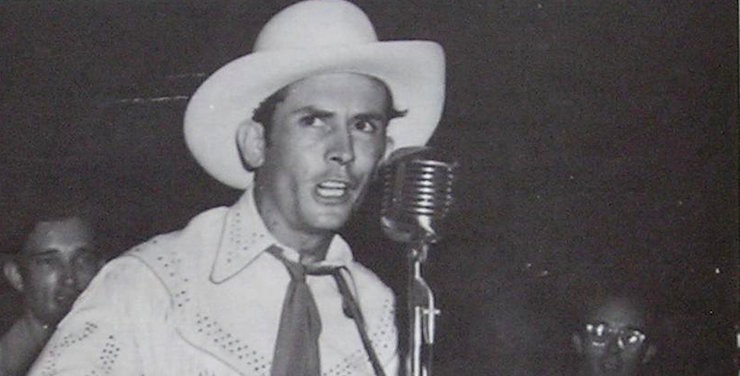
The Dark Irony That Won’t Let Go
“I’ll Never Get Out of This World Alive.”
The title lingers because it captures the paradox of Hank Williams.
He didn’t get out of this world alive.
But he also never left it.
His voice still crackles through old speakers.
His lyrics still echo in barrooms and back porches.
His influence threads through modern country, Americana, and beyond.
Death took his body.
It couldn’t touch his songs.
The Broader Meaning of That New Year’s Morning
January 1st is supposed to represent new beginnings.
Hope.
Resolution.
Clean slates.
But for country music in 1953, it marked an ending.
The loss of Hank Williams signaled the end of one era and the beginning of myth.
And myths are powerful.
They transform flawed humans into symbols.
But beneath the legend was a young man in pain.
A son.
A father.
A singer who wanted to be heard.
What If He Had Lived?
It’s one of country music’s great “what ifs.”
What if Hank had gotten clean?
What if better medical care had managed his pain?
What if he had lived to 50?
60?
Would he have evolved with the genre?
Would he have crossed into rockabilly?
Would he have mentored the next generation?
We’ll never know.
But perhaps part of his mystique comes from that unanswered question.
He left before repetition could dull his brilliance.
He remains forever 29.
Forever urgent.
Forever unfinished.
The Day the Music Died—Before That Phrase Existed
Years later, the phrase “The Day the Music Died” would be associated with another tragic plane crash in 1959.
But for country fans in 1953, the music died in a Cadillac on a winter highway.
Not with flames.
Not with spectacle.
But quietly.
In the back seat.
That quiet makes it more haunting.
Why We Still Talk About Him
Because authenticity never goes out of style.
Because pain, when turned into poetry, becomes universal.
Because sometimes the most powerful voices are the ones that tremble.
Hank Williams didn’t live long.
But he lived loudly through his songs.
And maybe that’s the ultimate irony.
The man who sang about not getting out of this world alive ended up becoming one of the few artists who never truly left it.
Final Reflection
On that New Year’s morning in 1953, a Cadillac rolled to a stop and the world unknowingly shifted.
A 29-year-old legend was gone.
But the music?
The music kept playing.
And somewhere, in every lonely jukebox and every cracked vinyl record, Hank Williams is still singing.
Still warning.
Still confessing.
Still alive.