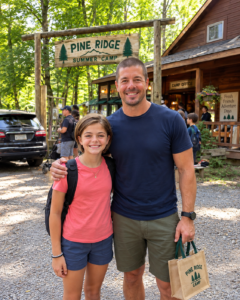
I trusted one of my closest friends to drive my ten-year-old daughter to summer camp. An hour later, he texted me: “Greta’s checked in. She’s excited. Everything’s fine.”
So I put my phone away and went back to work.
A few hours later, the camp administrator called.
“Your daughter is safe,” she said.
Then she paused.
“But I need you to come here as soon as possible.”
My stomach tightened instantly.
“What happened?”
Another pause.
“It concerns the man who dropped her off.”
I had been raising Greta alone for years.
Being a single mother and working as a nurse meant my entire life revolved around making impossible schedules somehow work.
School pickups.
Overnight shifts.
Doctor appointments.
Sick days.
Emergency calls from the hospital.
Usually, I found a solution.
That morning, I couldn’t.
I had promised Greta I would drive her to summer camp myself.
She had been looking forward to it for weeks.
The night before, she packed her bag three separate times because she kept worrying she had forgotten something.
By breakfast, she was already wearing the camp T-shirt and talking nonstop about swimming, crafts, and the girls she hoped would be in her cabin.
Then my phone rang.
The hospital.
Two nurses had called out sick.
They needed me early.
Immediately.
I stood in the kitchen staring at the clock, trying to calculate whether there was any possible way I could drive forty minutes to camp and still get to work in time.
There wasn’t.
That was when Owen offered to help.
Owen had been one of my closest friends for years.
I trusted him.
Completely.
He had been there through some of the hardest parts of raising Greta on my own.
If something broke in the house, he helped fix it.
If my car needed looking at, he checked it.
He never forgot Greta’s birthday.
And Greta adored him.
As far as we were concerned, Owen was practically family.
“I’ll drive her,” he said.
I shook my head.
“Owen, camp is forty minutes in the opposite direction from your place.”
He shrugged.
“I’ll survive forty minutes.”
Then he smiled at Greta.
“You ready, camper?”
She practically jumped out of her chair.
I still hesitated.
“Owen…”
“Go.”
His voice softened.
“You have patients who need you. I’ve got Greta.”
That was enough.
I hugged my daughter.
Told her to have fun.
Made her promise to listen to the counselors.
Then I rushed to the hospital.
About an hour later, my phone vibrated.
A message from Owen.
Greta’s checked in. She’s excited. Everything’s good.
I smiled.
One crisis handled.
I sent back a heart emoji, slipped the phone into my pocket, and returned to my shift.
For the next several hours, I barely thought about camp.
Work was busy.
Medications.
Charts.
Patient calls.
A family needing updates.
Then my phone rang again.
Unknown number.
I almost ignored it.
Something made me answer.
“Hello?”
A woman spoke.
“Hi. Is this Greta’s mother?”
“Yes.”
“This is Karen. I’m an administrator at the summer camp.”
Immediately, something in her voice made me uneasy.
She sounded controlled.
Too controlled.
“Is Greta okay?”
“Yes.”
The answer came quickly.
“Greta is safe.”
My heart still started racing.
“But I need you to come here as soon as you can.”
I stepped away from the nurses’ station.
“What happened?”
Silence.
Not long.
Just long enough to scare me.
Then Karen said,
“It’s about the man who brought her this morning.”
I frowned.
“Owen?”
“Yes.”
For a second, I almost laughed.
Not because anything was funny.
Because the idea made absolutely no sense.
“There has to be some misunderstanding. Owen is one of my closest friends.”
Karen didn’t respond the way I expected.
No reassurance.
No explanation.
She simply said,
“I really think you need to come here.”
My hands went cold.
“What did he do?”
“I’d rather explain when you arrive.”
“Is Greta with him?”
Another pause.
“She’s safe.”
That answer did nothing to calm me.
I arranged to leave the hospital as quickly as I could.
The entire drive to camp, my mind invented possibilities faster than I could dismiss them.
Maybe there had been an argument.
Maybe Owen had gotten into trouble at check-in.
Maybe someone misunderstood something he said.
Maybe his identification didn’t match the paperwork.
Anything.
I kept telling myself the same thing.
I know Owen.
He had held Greta when she cried after losing her first tooth.
He had taught her how to ride a bike.
He had sat beside me in the emergency room years earlier when she broke her wrist.
He had been part of our lives for so long that questioning him felt almost ridiculous.
Still, Karen’s voice wouldn’t leave my head.
It’s about the man who brought her.
When I finally reached the camp, I parked badly and hurried toward the main office.
Karen was already waiting outside.
She recognized me immediately.
“You’re Greta’s mother?”
“Yes.”
“Is she okay?”
“She’s fine.”
“Then what happened?”
Karen glanced toward the building.
“Come with me.”
She didn’t offer small talk.
She didn’t try to reassure me further.
She simply turned and walked down the hallway.
I followed.
We passed the reception desk.
A supply room.
Two offices.
Then Karen stopped outside a closed door.
She looked at me before opening it.
That look made my stomach twist.
“What?”
She didn’t answer.
She pushed the door open.
I stepped inside.
Greta was there.
Safe.
Sitting in a chair.
But she wasn’t alone.
Someone was sitting beside her.
And the instant I saw who it was, every explanation I had invented during the drive disappeared.
My stomach dropped.
My younger sister was sitting beside my daughter.
Not a counselor.
Not a police officer.
My sister, Beth, whom I hadn’t spoken to in almost six years.
She stood when she saw me. Her hands opened, then closed again.
“Anna.”
I looked past her.
Greta’s backpack rested against the chair. Her water bottle sat on the table. Nothing was broken. Nothing looked wrong.
Except Beth was here.
And Owen wasn’t.
“Come here, sweetheart.”
Greta stood immediately.
That frightened me more than resistance would have.
Usually, she wanted explanations. Usually, she asked whether she could finish something first.
Now she crossed the room and wrapped both arms around my waist.
I held the back of her head.
“Did anyone hurt you?”
“No.”
“Did anything happen in the car?”
“No, Mom.”
“Where’s Owen?”
Her fingers tightened against my scrub top.
Beth took one step toward us.
I raised my hand.
“Don’t.”
She stopped.
Karen closed the door behind us, leaving it slightly ajar.
“Before anything else,” she said, “I need to apologize for the way I spoke on the phone.”
I stared at her.
“You made me think someone had hurt my child.”
“I understand that.”
“No. You made me think Owen had hurt my child.”
Her expression changed.
“I should have told you clearly that he hadn’t. I was trying to manage several things, and I handled that badly.”
“Then handle this better. Where is he?”
“He’s at the community hospital.”
The room seemed to shift.
Greta looked up at me.
“He fell down.”
I crouched so quickly my knees struck the floor.
“What do you mean, fell down?”
“He was talking. Then he sat down funny. And his cup fell.”
Beth’s mouth trembled.
I looked at her again.
“What are you doing here?”
“The hospital called me.”
“Why would the hospital call you about Owen?”
She didn’t answer immediately.
And suddenly I hated every pause I had heard that afternoon.
“Because I’m his emergency contact,” she said.
For a moment, I couldn’t make those words fit together.
My sister.
My best friend.
Six years of silence between us, and she was the person someone called when he couldn’t speak.
“Since when?”
“Last fall.”
I stood slowly, keeping Greta against me.
Karen pulled out a chair.
I didn’t sit.
“Start at the beginning,” I said. “And this time, nobody decides what I can handle.”
Owen had checked Greta in properly.
Karen showed me the paperwork because I needed something solid to look at.
My authorization.
His signature.
The counselor’s initials beside the cabin assignment.
He had carried Greta’s bag to the covered assembly area and stayed while her group made name tags.
Nothing unusual had happened during the drive.
Nothing inappropriate had happened at check-in.
He had sent the message after Greta found another girl who liked the same mystery books.
“She was smiling,” Karen said. “He wanted you to know that.”
My eyes burned.
“Then what?”
“He came back to the office.”
“Why?”
Karen glanced at Greta.
I felt my daughter notice.
Her body stiffened beneath my arm.
“No more looks,” I said. “If something isn’t for children, say that.”
Beth spoke gently.
“Greta, would you like to finish your drawing with Marisol while your mom and I talk?”
“No.”
It came out flat.
She looked between us.
“People keep saying we’ll talk in a minute. Then something else happens.”
I closed my eyes briefly.
She had been here for hours.
Safe, yes.
But surrounded by adults trying to cushion information until every withheld detail had become something frightening.
I knelt again.
“Owen is at the hospital. I’m going to find out exactly why. Then I’m going to see him.”
“Can I come?”
“If the doctors say visiting is okay.”
“Are you mad at him?”
I could not answer that without lying.
“I’m scared,” I said. “Sometimes those look similar.”
She considered this.
Then she whispered, “He didn’t make me keep it secret.”
“What secret?”
Beth lowered her head.
Greta’s eyes filled.
“He said he was going to tell you himself.”
I brushed the hair away from her face.
“Whatever this is, sweetheart, it isn’t your job to protect any grown-up.”
She nodded, but not like she believed me yet.
Marisol appeared in the doorway after Karen called her. She introduced herself, then waited without reaching for Greta.
I told my daughter exactly where I would be.
Not far away.
Not later.
In this room, with the door open.
Only then did she go.
Her shoes squeaked once in the hallway.
I waited until the sound faded.
“What secret?”
Karen folded her hands on the table.
“Owen asked about canceling a volunteer commitment.”
“What commitment?”
“The family building afternoon. Friday.”
I remembered a box on the registration form.
Families could come at the end of the week and help their children build small wooden birdhouses.
I had left it blank.
My Friday shift ended at seven.
Owen must have seen the flyer on our refrigerator.
“He signed up two weeks ago,” Karen continued. “This morning, he wanted us to have another adult available for Greta.”
“Why?”
“He said he might be unable to come.”
Beth sat down.
I remained standing.
Karen’s voice softened.
“He asked whether we could keep the change quiet until he spoke with you. Then he became pale.”
I could picture it with terrible clarity.
Owen trying to finish a practical conversation.
Owen worrying about a birdhouse while something inside his chest went wrong.
“He said he needed a minute,” Karen continued. “We called an ambulance when he lost consciousness. Our nurse reached him immediately.”
“Was he breathing?”
“Yes.”
“Did he need CPR?”
“No. The paramedics took over quickly.”
Some part of my mind began sorting clinical questions.
How long unconscious?
Chest pain?
Pulse?
Blood pressure?
The nurse in me was reaching for anything the friend in me could not bear.
“Why didn’t you call me then?”
“You weren’t listed as his emergency contact. Beth was. Greta was with her cabin group, away from the office.”
Karen looked directly at me.
“We contacted Beth. We believed we could avoid frightening Greta until we knew more.”
“And then?”
“She saw the ambulance leaving,” Beth said.
Of course she had.
Children noticed the things adults hoped they wouldn’t.
“She recognized his shoes.”
I pressed my fingers against my mouth.
Owen’s ridiculous orange running shoes.
He bought them on clearance because, according to him, nobody with dignity wanted that color.
Greta had called them traffic cones.
“He was supposed to come back and say goodbye,” Beth said. “When he didn’t, she asked questions.”
“You came here instead of the hospital?”
“I went there first. Once he was stable, he asked me to check on her.”
“Why not call me?”
Beth’s eyes rose to mine.
“He thought he had time to tell you differently.”
“That doesn’t answer my question.”
“No,” she said. “It doesn’t excuse it, either.”
I finally sat.
My legs had begun to shake.
“What is wrong with him?”
Beth drew a breath.
“He has a serious heart condition, Anna. This wasn’t the first time he’s needed treatment.”
I thought of the last eight months.
Owen standing at the bottom of my stairs while Greta ran up to fetch something.
Owen declining a second cup of coffee.
Owen letting me carry one end of a bookshelf and making a joke about finally respecting workplace safety.
He had lost weight.
I had told him he looked good.
The memory made me feel sick.
“What condition?”
“Dilated cardiomyopathy.”
I stared at her.
“How long?”
“He was diagnosed in October.”
October.
I counted backward before I could stop myself.
Thanksgiving.
Christmas.
Greta’s birthday in February.
The afternoon he had helped me shovel snow and then gone home early.
All of it happened after October.
“His cardiologist has been adjusting his medication,” Beth said. “He was doing better for a while. Recently, he’s been having more problems.”
“And you knew.”
“Yes.”
“You knew, and I didn’t.”
“Yes.”
I wanted her to argue.
I wanted an excuse I could dismantle.
Instead, she sat there accepting the words, which left my anger nowhere easy to go.
“Are you together?”
“No.”
The answer came immediately.
“Then why you?”
“Because he needed someone.”
“He had me.”
Beth’s face changed, but she said nothing.
That hurt worse.
“What?”
She rubbed her palms against her trousers.
“He said you already had enough people depending on you.”
I laughed once.
It sounded ugly in the small office.
“So the solution was to lie to me.”
“He was wrong.”
“Then why did you help him?”
“Because when someone tells you they’re frightened and alone, sometimes you make the first useful choice before the wisest one.”
Her eyes shone.
“I drove him to an appointment. Then another. I told myself he’d tell you when he was ready.”
“And you liked being the person he called.”
The accusation landed.
Beth looked down.
“Yes,” she said quietly. “I did.”
I had not expected honesty that sharp.
“For years,” she continued, “I’ve been someone people call after they’ve tried everyone else. I liked being trusted.”
The air conditioner clicked on.
Somewhere outside, children cheered.
I remembered another office.
Another summer.
Beth sitting across from me with the same tight mouth, telling me she couldn’t collect Greta from preschool anymore.
At the time, my husband had been gone for nine months.
Not dead.
Gone.
A moving truck, a short conversation, a bank account suddenly emptier than it should have been.
He sent money irregularly and explanations more regularly.
Beth had been my backup.
Then she stopped.
She said she was moving.
She said she needed to get her life together.
I had heard selfishness in every word.
We fought on my porch while Greta slept upstairs.
“You get to leave,” I told her. “Everybody gets to leave except me.”
Beth had cried.
I hadn’t followed her when she walked away.
Later, she sent messages.
I answered the practical ones and ignored the rest until the messages stopped.
Owen never spoke badly about her.
That had irritated me, too.
Now I looked at her across Karen’s table.
“What else don’t I know?”
Beth swallowed.
“About Owen?”
“About any of this.”
She looked toward the open door.
“Not here,” she said. “Not because you can’t handle it. Because Greta deserves to finish one drawing without hearing us fall apart.”
For the first time that afternoon, the pause felt like a boundary instead of a threat.
I nodded.
Once.
Then I asked for the hospital’s number.
Owen was awake when the nurse transferred the call.
His voice sounded thinner than usual.
“Hey.”
One small word.
I turned toward the window so Beth couldn’t see my face.
“Don’t hey me.”
“All right.”
“What happened?”
“My heart staged a protest.”
“Owen.”
“I know.”
I gripped the phone harder.
“You don’t get to make this funny yet.”
Silence.
Then, “Okay.”
The absence of a joke frightened me almost as much as the ambulance had.
“Is Greta all right?”
“She’s scared.”
He breathed out.
“I’m sorry.”
“She thought you weren’t coming back.”
“I asked Beth—”
“I know what you asked Beth.”
He went quiet.
I watched a counselor guide four children across the lawn.
They carried a canoe between them, awkwardly, laughing whenever one end dipped.
“Did you know you were too sick to drive her?”
“No.”
“Tell me the truth.”
“I am.”
His voice strengthened slightly.
“I hadn’t fainted before. I wasn’t dizzy when we left. My doctor hadn’t told me to stop driving.”
I closed my eyes.
He continued carefully.
“I got tired carrying the bag. More tired than I expected. That’s why I went back to cancel Friday.”
“What did the doctors say now?”
“They’re keeping me. They want more monitoring and some additional tests.”
“Are you having chest pain?”
“No.”
“Trouble breathing?”
“Better than earlier.”
That answer was honest enough to hurt.
“I’m coming.”
“You don’t need to leave work.”
I turned away from the window.
“I already did.”
“Anna—”
“No.”
The word came out louder than I intended.
Beth looked up.
I lowered my voice.
“You don’t get to decide I have too much to do and quietly remove yourself from the people I love.”
On the other end, something shifted against the phone.
For a few seconds, he didn’t speak.
Then he said, “I didn’t want you to look at me like a patient.”
I pressed my forehead against the cool glass.
“You should have worried about me looking at you like a liar.”
“I know.”
But beneath my anger, beneath all the frightened calculations, another feeling was beginning to take shape.
Not forgiveness.
Not yet.
Grief for the months he had spent carrying something heavy while I stood close enough to help and never knew.
Greta didn’t want to leave camp.
That surprised me.
Then I realized she didn’t want to stay, either.
She stood beside her backpack with the expression she wore when trying to solve a problem that had no right answer.
“If I come, will I miss making the cabin flag?”
“Yes,” I said.
“If I stay, will Owen think I don’t care?”
“No.”
“Will you?”
I crouched beside her.
“Absolutely not.”
She studied my face.
“I want to see him.”
“I know.”
“But Ava said I could draw the fox.”
I touched her wrist.
“You’re allowed to want to draw a fox while someone you love is sick.”
Her eyes filled again.
“That sounds mean.”
“It isn’t.”
I had spent years failing to give myself that permission.
Saying it to her felt like opening a window in a room I had forgotten was sealed.
Karen arranged a brief video call.
Owen looked pale against a white pillow, but he smiled when Greta appeared.
“Traffic cones,” she whispered.
He lifted one orange shoe into view from the edge of the bed.
“Still here.”
“Are you dying?”
Every adult in the office became still.
Owen did not joke.
“The doctors are taking good care of me. I’m sick, and I need treatment. They’re figuring out what comes next.”
“Mom said you fainted.”
“I did.”
“You scared me.”
“I’m sorry, bug.”
She stared at the screen.
“You can’t just go without saying goodbye.”
His expression broke a little.
“You’re right.”
“Even if there’s an ambulance.”
“Even then, somebody should explain.”
She thought about this.
Then she held up her drawing.
The fox had enormous ears and six legs.
Owen leaned closer.
“Fast fox.”
“The extra ones are shadows.”
“Obviously.”
For the first time since I arrived, she smiled.
She chose to stay until dinner.
Not the whole week yet.
Just until dinner.
Karen wrote my number on a card for the cabin counselor, although it was already in the file.
She promised Greta that questions would receive answers.
Then she looked at me.
“I mistook being cautious for being clear. I’m sorry.”
I accepted the apology without pretending the drive hadn’t happened.
“Don’t do that to another parent.”
“I won’t.”
Beth followed me into the parking lot.
“I can drive,” she said.
“I can drive myself.”
“I know.”
She stopped beside her car.
“I meant you shouldn’t have to.”
We took my car.
Beth sat in the passenger seat with her hands folded around her phone.
For the first ten minutes, I concentrated on the road.
The hospital was twenty minutes away.
Too close for everything between us.
Too far for silence.
“How did you and Owen start talking again?”
“We never entirely stopped.”
I glanced at her.
“Not about you,” she said quickly. “He didn’t give me reports.”
“Then about what?”
“Cars. Work. Sometimes nothing important.”
Owen had known Beth almost as long as he had known me.
We met through the same apartment building years before Greta was born.
He used to help everyone move furniture.
Beth used to feed everyone afterward because she believed ordering pizza counted as hosting.
I had forgotten they existed outside their relationships with me.
Or perhaps I had preferred not to remember.
“He called me after his diagnosis,” she continued. “He needed a ride from a procedure. He didn’t want to cancel.”
“And you happened to be available.”
“Yes.”
The road narrowed beside a stretch of pines.
I tightened my grip on the steering wheel.
“What did you mean earlier?”
“Which part?”
“Being someone people call last.”
She watched the trees.
“I wasn’t asking you to feel sorry for me.”
“That isn’t what I asked.”
She nodded slowly.
“I know.”
A mile passed.
Then she said, “I didn’t move six years ago because I found a better life somewhere else.”
I kept looking forward.
“I went into treatment.”
My foot eased off the accelerator.
“Treatment for what?”
“Alcohol.”
The word sat between us.
Small.
Entirely different from every explanation I had carried.
“You barely drank.”
“Around you.”
I remembered wine at Christmas.
A joke about terrible dates.
Her arriving late to breakfast once, wearing sunglasses.
Nothing I had thought to gather into a pattern.
“After my back injury,” she said, “I started drinking to sleep. Then to settle my nerves. Then because stopping felt worse.”
“Were you drinking when you watched Greta?”
“No.”
She turned toward me.
“No, Anna. I need you to hear that. But I was getting to the point where I couldn’t promise myself it would stay that way.”
A truck passed in the opposite direction.
The sound filled the car.
“I canceled that last pickup because I’d been drinking before noon,” she said. “I called you instead of getting behind the wheel.”
I remembered that afternoon.
A patient crashing.
My phone buzzing.
Beth saying she couldn’t do it.
Me snapping that she was always tired lately, always busy, always something.
Owen had picked Greta up instead.
Of course he had.
“He knew?”
“Afterward. I called him because I didn’t know what to do.”
“And nobody thought to tell me?”
“I was ashamed.”
“You let me think you didn’t care.”
“Yes.”
Her voice cracked.
“I thought being selfish was less unforgivable than being unsafe.”
I pulled into a small gravel turnout.
For a moment, neither of us moved.
Six years could not be corrected by one revelation.
There were missed birthdays.
Unread messages.
A niece who knew her aunt mostly through photographs.
But beneath those losses lay a fact I could not ignore.
The day I remembered as my sister abandoning my daughter was the day she had refused to put my daughter in danger.
“Why didn’t you tell me later?”
“I tried twice. Not well.”
I remembered a message beginning, There are things I should explain.
I had answered, Then explain why you disappeared.
She had replied, Can we talk in person?
I had never chosen a date.
“I should have told you anyway,” she said. “In writing. Without waiting for you to make it easier.”
I stared through the windshield.
“How long?”
“Five years sober in August.”
Five years.
An entire life rebuilt while I kept her frozen on my porch.
“I don’t know what to do with that,” I said.
“You don’t have to do anything today.”
For the first time since childhood, my sister sat beside me without trying to make me less angry or herself less guilty.
I started the car.
At the hospital entrance, I handed her the parking ticket.
A tiny thing.
A practical thing.
She took it like I had handed her something fragile.
Owen looked smaller in the bed.
That was the first thing I hated.
Not the monitor.
Not the intravenous line.
The way the bed seemed built for someone larger than the man lying in it.
He smiled when we entered.
Then he saw my face and stopped.
“Greta?”
“Making a fox.”
“Good.”
I stood at the foot of the bed.
Beth remained near the doorway.
The monitor marked out his heartbeat with an ordinary electronic sound.
I had heard it thousands of times.
Now I listened to every interval.
“What did the cardiologist say?”
“They’re reviewing the rhythm from earlier. My heart’s not pumping as well as they’d like.”
“How poorly?”
He looked at Beth.
I felt anger flare.
“Don’t look at her. I asked.”
“Anna,” Beth said gently, “let him answer.”
I turned toward her, ready to snap.
Then stopped.
She wasn’t defending the secret.
She was reminding me there was a frightened person in the bed.
Owen gave me the number.
I absorbed it.
Asked about his medications.
Asked about recent swelling.
Asked about shortness of breath at night.
He answered until, finally, he said, “Can you sit down?”
I looked at the chair.
“I’m trying to understand.”
“I know.”
“Then why—”
“Because you’re standing like you’re about to tell my family something bad.”
The words emptied me.
I sat.
Beth said she would get coffee.
Neither of us stopped her.
When the door closed, Owen looked toward the window.
“I was going to tell you.”
“When?”
“Before Friday.”
“Because you couldn’t build a birdhouse?”
He gave a tired nod.
“That was what finally made it impossible to keep pretending.”
I leaned forward.
“You came to my house this morning.”
“Yes.”
“You knew you were ill.”
“Yes.”
“And you let me hand you my child.”
His face tightened.
“I believed I could drive her safely. I wouldn’t have taken her if I’d felt faint or if the doctor had restricted me.”
I believed that.
It did not make the rest acceptable.
“You should have let me decide with all the facts.”
“Yes.”
“No explanation after that?”
“No.”
He swallowed.
“You’re right.”
For a while, we listened to the monitor.
Then I asked the question that had been waiting beneath every other one.
“Did you really think I only wanted you around because you were useful?”
He closed his eyes.
That was an answer.
I looked at his hands.
Those hands had tightened Greta’s bicycle handlebars.
Replaced the latch on my back gate.
Held a paper cup while he sat beside me in the emergency room, telling a frightened six-year-old that casts made excellent autograph books.
I had thanked him.
Always.
But gratitude was not the same as asking whether someone was tired.
“I didn’t think you were using me,” he said.
“Then what?”
“I liked being the person who could help.”
“So do I.”
“I know.”
He looked at me then.
“That’s why I knew how hard you’d try.”
The room grew quieter as afternoon moved toward evening.
A nurse came in.
Owen introduced me as his friend.
Something about the plainness of it nearly undid me.
His friend.
Not his nurse.
Not his responsibility.
Not the person whose life he had been holding together in spare hours.
When she left, he rubbed his forehead.
“My father was sick for years.”
“I know.”
“You know he was sick. You don’t know what our house sounded like.”
I waited.
“Every conversation turned into medication or money. My mother stopped going anywhere without checking whether someone could sit with him.”
He watched a shadow move across the wall.
“He wasn’t a bad man. He hated it, too. But by the end, nobody remembered how to talk about anything else.”
“And you thought that would happen with us.”
“I thought I’d stop being Owen.”
I let the words settle.
“And become what?”
“Another thing you had to manage.”
I wanted to tell him that was ridiculous.
Instead, I thought about my kitchen.
The calendar divided into colors.
Greta’s school notices beneath magnets.
My shift schedule.
The list of things that needed fixing.
Owen had made himself comfortable in the gaps.
He brought groceries when he came for dinner, pretending he had bought too much.
He fixed the leaking faucet before sitting down.
He accepted leftovers only if he could claim he was doing me a favor.
I had thought he was simply kind.
He was kind.
But kindness had also given him a way to remain needed without risking being a burden.
“You could have come for dinner and done nothing,” I said.
“I know.”
“Do you?”
He didn’t answer.
I swallowed hard.
“Last month, when you said you couldn’t help with the garage, I told you we’d find another weekend.”
“I remember.”
“I should have asked you to come anyway.”
“Anna—”
“I’m not taking responsibility for your secret.”
He nodded.
“But I’m allowed to notice what I missed.”
His eyes grew wet.
For the first time since I had known him, he didn’t turn away quickly enough to hide it.
Beth returned with two coffees and a tea.
She put the tea beside Owen.
“You’re not getting the terrible coffee,” she said.
“It’s the only good thing about hospitals.”
“You have low standards.”
It was an easy exchange.
Familiar.
I felt a quick, unreasonable stab of jealousy.
They had developed a language during appointments I hadn’t known existed.
Then Beth handed me my coffee.
A little milk.
No sugar.
She still remembered.
I wrapped my hands around the cup.
Owen looked between us.
“Did you talk?”
“Some,” I said.
“I didn’t tell her,” Beth added.
“I know.”
There was something else in their faces.
Something unfinished.
My stomach tightened again.
“What?”
Owen shook his head.
“Nothing that needs—”
“No.”
He stopped.
I set the coffee down.
“We’re done with that sentence.”
Beth pulled the second chair close to the bed.
“It’s about the camp.”
I looked at her.
“What about it?”
“The scholarship.”
I had applied through Greta’s school.
The application asked about income, household size, and why camp would benefit the child.
I had written about how much time Greta spent adapting to adult schedules.
I had deleted the word lonely before submitting it.
When the award arrived, I cried in the laundry room.
“What about it?” I repeated.
Beth looked at Owen.
This time, I understood she was not asking permission to speak.
She was asking him not to make her say it alone.
Owen rubbed the edge of the blanket.
“I contribute to the camp’s assistance fund.”
I stared.
“You paid for Greta?”
“Not directly.”
“What does that mean?”
“I’ve donated for years. The school handles referrals. The camp makes the awards.”
“Did you ask them to choose her?”
“No.”
His answer was firm.
“I told you about the program because I knew it existed. I didn’t see your application.”
I remembered him leaving the brochure on my counter.
A casual gesture.
“Someone at the shop mentioned this,” he had said.
Another omission.
Another thing I had accepted because it arrived wrapped in practical help.
“Why that camp?”
He was quiet for so long that Beth reached for his hand.
Then he said, “Because I went there.”
I had known Owen for twelve years.
I knew which side of a sandwich he ate first.
I knew he hated thunderstorms but loved heavy rain.
I knew he kept spare phone chargers in his truck because someone always needed one.
I did not know he had gone to summer camp.
“My mother sent me the summer after my dad died,” he said.
He looked down at Beth’s hand around his.
“We couldn’t afford it. Somebody paid. I never found out who.”
The monitor continued its patient rhythm.
“I was angry all the time. At her. At him. At anyone who said he wasn’t suffering anymore.”
His voice roughened.
“At camp, nobody needed me to be brave for my mother. I got to be twelve.”
I felt something in my chest give way.
“So when I could afford it,” he continued, “I started sending money.”
“How long?”
“Eleven summers.”
I looked at Beth.
She was crying quietly.
“You knew?”
“Only recently.”
Owen glanced toward the window.
“This year, I almost stopped.”
“Because of the medical bills?”
He nodded.
“I had to cut back at the shop. There wasn’t much extra.”
I pictured the business he ran with a partner.
The early mornings.
The grease beneath his nails.
The way he had shrugged when I asked why he was taking fewer jobs.
Said he was getting sensible in middle age.
“I still made a smaller donation,” he said. “But that isn’t why I went into the office today.”
“Then why?”
“The volunteer coordinator knew me. I wanted to explain why I couldn’t do Friday.”
He paused.
“And ask them not to let Greta be the kid standing there without somebody.”
He hadn’t gone back into the office because he wanted recognition for helping my daughter. He had gone back because he was afraid of disappointing her.
I covered my face.
Not dramatically.
Not because I wanted either of them to comfort me.
I simply couldn’t keep holding my expression together.
For years, I had thought of Owen as someone who had stepped into the space Greta’s father left.
A good man who fixed what another man broke.
But that wasn’t the whole truth.
He had been reaching backward, too.
Toward a twelve-year-old boy who had learned that love meant watching someone disappear behind illness.
Toward a mother who never got to stop being strong.
Toward one summer when someone had given him permission to be a child.
And now he was sick himself.
Trying to make sure my daughter had that summer before she noticed.
“You idiot,” I whispered.
“I’ve heard.”
I lowered my hands.
“You wonderful, infuriating idiot.”
His mouth moved.
Not quite a smile.
“I didn’t want a big thing.”
“You fainted at a summer camp.”
“Poor planning.”
A laugh escaped me.
It broke in the middle.
Beth handed me a tissue.
I took it.
For a while, none of us spoke.
Then Owen said, “I need to tell you something else.”
I stiffened.
He noticed.
“No more hidden people. I promise.”
“What?”
“I asked Beth to be my emergency contact because she knows how to help without trying to fix the feeling.”
I looked at my sister.
She stared at the floor.
“In treatment,” she said quietly, “you learn you can’t make someone honest by needing them to be.”
The words hurt.
They were supposed to.
Not as punishment.
As something true.
“I thought if I told you,” Owen said, “you’d make a plan before I could admit I was scared.”
I wanted to deny it.
Instead, I looked at the questions I had already written in my phone.
Appointments.
Medications.
Work arrangements.
A whole structure built before I had asked the simplest thing.
“Are you scared?”
He looked at me.
His face changed slowly.
“Yes,” he said. “I’m really scared.”
I moved my chair closer.
This time, I didn’t ask another medical question.
We picked Greta up after dinner.
Beth drove.
I sat beside her with the window cracked, letting warm air move over my face.
At camp, Greta came running with a paper fox on a stick and a stain down the front of her shirt.
She stopped when she saw Beth.
“Are you coming, too?”
“If that’s okay with your mom.”
I looked at my daughter.
Then my sister.
“Yes,” I said. “She’s coming, too.”
Greta climbed into the back seat.
For the first few minutes, she told us about the cabin flag.
Then she went quiet.
“Mom?”
“Yes?”
“Did Aunt Beth do something bad?”
Beth’s hands tightened on the wheel.
I turned in my seat.
“Why do you ask?”
“Because we didn’t see her anymore.”
The question was so reasonable that I felt ashamed of every complicated adult explanation I had used to avoid it.
“Aunt Beth was having a hard time,” I said. “And I didn’t understand all of it.”
“Were you fighting?”
“Yes.”
“Are you still?”
Beth glanced at me.
“We have things to talk about,” I said. “But we’re talking.”
Greta considered that.
“Okay.”
Children sometimes accepted the first honest answer after resisting a hundred careful ones.
At the hospital, we checked with the nurse before bringing her in.
Owen had been moved to a monitored room.
More wires.
The same orange shoes beneath the chair.
Greta paused in the doorway.
He saw her looking.
“Lots of accessories,” he said.
“Does it hurt?”
“Mostly the sticky patches when they pull them off.”
She approached slowly.
I stayed behind her.
She held out the fox.
“For your room.”
He took it with both hands.
“Six legs.”
“Still shadows.”
“Right.”
She looked at his chest.
Then at the monitor.
Then back at him.
“Mom says you’ve been sick for a while.”
“Yes.”
“Why didn’t you tell us?”
He looked toward me.
I said nothing.
This was his answer to give.
“Because I made a mistake.”
Greta frowned.
“Grown-ups say that when they don’t want to explain.”
Beth turned away, pressing her lips together.
Owen nodded.
“Fair.”
He rested the fox on his blanket.
“I was afraid you’d worry about me every time we did something fun.”
“I’m worried now.”
“I know.”
“So it didn’t work.”
“No,” he said softly. “It didn’t.”
She moved closer.
“You can still come to dinner.”
His eyes shone.
“I’d like that.”
“You don’t have to fix the sink.”
“The sink’s broken again?”
“Owen,” I said.
He looked at me.
Then he laughed.
A real laugh this time.
Small, tired, and unmistakably his.
The following days did not become easy because we had finally told the truth.
Truth changed the shape of the work.
It did not remove it.
Owen stayed in the hospital while specialists adjusted treatment and investigated the rhythm that had caused him to collapse.
There were conversations about devices, restrictions, and what might happen if his heart function worsened.
Some questions had clear answers.
Others didn’t.
He hated the uncertain ones.
So did I.
Once, I arrived with a folder.
Owen looked at it.
I looked at him.
Then I put it beneath my chair and asked whether he wanted to hear about Greta’s canoe disaster.
“Was she in the canoe?”
“Mostly.”
“Excellent. Continue.”
We talked for twenty minutes before discussing the appointment schedule.
It felt like learning a skill I should already have possessed.
Beth and I began talking in pieces.
Not one magnificent conversation that repaired six years.
A walk to the vending machines.
A drive home.
Ten minutes in my kitchen while the kettle boiled.
She told me about the first apartment she rented after treatment.
The job she nearly lost.
The woman in her recovery group who taught her how to apologize without asking to be forgiven.
I told her about the years after my husband left.
How anger had been easier to carry than humiliation.
How every canceled plan felt like proof that Greta and I were the people everyone could disappoint.
Beth listened.
Then she said, “I left badly. But getting help wasn’t abandoning you.”
I stared at my tea.
“I know that now.”
“I need you to know it when you’re angry, too.”
That took longer.
But I nodded.
Because she was right.
I apologized for the messages I had ignored.
She apologized for the truths she had hidden.
Neither apology erased anything.
They gave us somewhere to begin.
Greta returned to camp the next morning.
She chose to.
I drove her myself before my afternoon shift.
At the gate, she asked whether staying meant she was being selfish.
“No,” I told her.
“What if something happens?”
“Then the adults will handle it and tell you what you need to know.”
She looked at me carefully.
“Actually tell me?”
“Actually tell you.”
She hugged me.
Then she ran toward Ava, who was already waving from the assembly area.
I watched until she disappeared into the group.
Karen came to stand beside me.
“How is he?”
“Still being evaluated.”
She nodded.
“I’ve spoken with our staff about yesterday.”
“Good.”
“No parent should have to guess what kind of emergency they’re driving toward.”
I appreciated that she did not ask me to reassure her.
We discussed Friday.
Owen would not be coming.
For a moment, I felt the old machinery start inside me.
Who could cover my shift?
Could I trade?
Could I make it there for the last half hour?
Then I stopped.
“Could Greta bring her aunt?”
Karen smiled.
“Of course.”
When I asked Beth, she didn’t say yes immediately.
She checked her schedule.
That small pause mattered.
Once, I would have heard reluctance.
Now I watched her consider what she could honestly promise.
“Yes,” she said. “I can be there.”
And she was.
She sent a photograph of Greta wearing oversized safety goggles beside a crooked birdhouse.
The roof leaned.
The paint was purple.
Beth’s thumb covered one corner of the picture.
Owen studied it on my phone.
“Structurally adventurous.”
“Don’t you dare offer to fix it.”
“I was going to say beautiful.”
“Better.”
He looked at the picture again.
“It is, though.”
He came home eight days after the ambulance took him from camp.
Home meant his own small house.
Not mine.
He had wanted to go back to something familiar, and we respected that.
We helped arrange what he needed.
His partner handled the shop.
Beth took one appointment.
I took another.
A neighbor offered groceries.
Owen tried to refuse nearly everything.
We let him refuse some things.
That mattered, too.
Being helped could not become another way of losing control.
But when he claimed he could carry a heavy box down the basement stairs, Beth simply sat on it.
“Problem solved,” she said.
He glared.
She smiled.
I laughed harder than the situation deserved.
We were all tired.
There were setbacks.
A medication made him dizzy.
One appointment left him quiet for the rest of the day.
Once, he snapped at me for asking how he felt three times in twenty minutes.
I snapped back.
Then we both apologized.
We began learning the difference between care and surveillance.
Between privacy and secrecy.
Between a bad afternoon and a catastrophe.
Nothing about it was cinematic while we were living it.
It was pill bottles and laundry.
Insurance calls.
An untouched sandwich.
A joke that worked one day and didn’t the next.
But sometimes Greta sat on his porch describing a book, and he listened without trying to stand up and repair something.
Those afternoons felt important.
At the end of the month, I invited Beth and Owen to dinner.
I told Owen plainly that dinner was the entire invitation.
“No tools.”
“What if I bring a screwdriver emotionally?”
“Leave that home, too.”
Beth arrived first with bread.
Not enough food to prove she deserved a place.
Just bread.
Greta met her at the door and asked whether they could finish painting the birdhouse.
They had decided it needed stars.
I listened to them at the kitchen table.
My sister asking where the blue paint was.
My daughter explaining that stars could be green if they wanted.
Such ordinary sounds.
I had not realized how much grief could hide inside their absence until they returned.
Owen arrived ten minutes later.
He walked more slowly than before.
He paused at the front step.
I saw him consider pretending he was checking his phone.
Then he looked up at me.
“Need a second.”
“Take one.”
I waited.
No fuss.
No reaching for his elbow without asking.
When he was ready, he came inside.
Greta looked up from the table.
“Owen, sit here.”
She had placed him beside the window.
His usual seat.
Beside his plate lay a folded card.
He opened it.
On the front, she had drawn an orange shoe.
Inside, in careful handwriting, she had written:
You can come even when you can’t help.
He read it twice.
Then he set it down very carefully.
Beth turned toward the sink.
I stayed where I was.
Owen pressed his fingers against his eyes.
Greta watched him, uncertain.
“Is it sad?”
He shook his head.
“Not the bad kind.”
She nodded as though that made perfect sense.
Then she pushed the green paint toward Beth and returned to the birdhouse.
Dinner was imperfect.
The chicken was dry.
Beth and I disagreed about whether our mother had ever successfully grown tomatoes.
Greta spilled water.
Owen began to stand automatically.
Then stopped.
I handed my daughter a towel.
She cleaned it up herself.
He stayed in his chair.
We kept talking.
Later, Beth took Greta upstairs to wash the paint from her hands.
Owen and I sat at the table while evening settled against the windows.
The birdhouse stood between us.
Crooked roof.
Purple walls.
Green stars.
He touched one dry corner with his finger.
“I’m sorry about that day.”
“I know.”
“Not just the hospital.”
“I know.”
He looked toward the stairs.
“I thought if I couldn’t be dependable, I’d lose something.”
I considered my answer.
For years, dependable had meant never needing anything.
Never falling behind.
Never being the reason someone else had to change their plans.
I had taught myself that definition.
I had taught it to him, perhaps, by accepting it so gratefully.
And Greta had been watching both of us.
“We need a better definition,” I said.
He nodded.
Outside, a car moved slowly down the street.
Upstairs, Greta laughed at something Beth said.
Owen listened.
Then he looked at the card again.
“I don’t know how good I’ll be at this.”
“At what?”
“Showing up empty-handed.”
I reached across the table.
“You brought yourself.”
He looked at my hand for a moment before taking it.
His grip was warm.
Not as strong as I remembered.
Strong enough.
When Beth and Greta came downstairs, my daughter stopped beside him.
“Are you tired?”
“A little.”
“You can stay while we read.”
He glanced at me.
I nodded.
So he stayed.
No broken hinge.
No school pickup.
No emergency he could solve.
Just the four of us in the living room, with the porch light on and tomorrow still uncertain.
Greta settled beside him and opened her book.
Halfway through the first page, she leaned against his arm.
Owen let his head rest against the back of the couch.
For once, he did not try to make himself useful.
He simply stayed, and we made room.
They Humiliated the Engineer at Dover Until Her Evidence Grounded a Major.