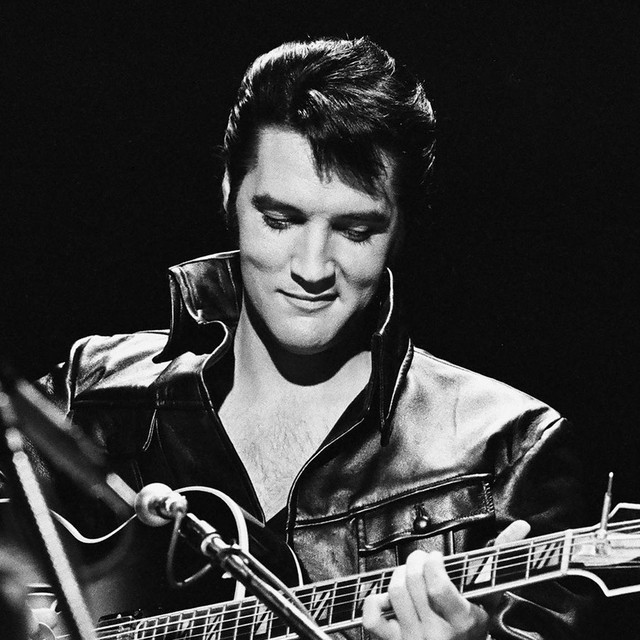
It was a quiet, warm Sunday evening in July 1968 when Elvis Presley found himself driving through the streets of Memphis, the city he called home. As the king of rock and roll, his life was filled with the noise of fame, but on this particular evening, as the late afternoon light turned into a soft golden dusk, Elvis was simply a man enjoying a drive through a neighborhood that had helped shape him. The familiar sights and sounds of his youth surrounded him, but nothing prepared him for what he was about to experience.
Elvis had grown up in a part of Memphis where the boundaries between white and black communities were fluid, a place where music crossed every line that society tried to enforce. Music was a language spoken across color and class. It was in the air, in the churches, in the homes, and in the streets. And it was the one thing that kept people together in the most divided of times. This evening, with his car windows down, Elvis was soaking in the summer air, the sound of the street, when he heard it—something different, something pure.
A Sound That Transcended Time and Place
It wasn’t just the usual hum of the city or the chatter of people sitting on their porches. This was something else. As the Cadillac slowed to a near stop, Elvis realized what he was hearing. Voices. Gospel voices. And they weren’t just any voices—they were voices that hit him in a way that nothing else could. They were harmonizing with a depth and rawness that made everything else seem distant. It was as if he were transported back in time to the very soul of church music, where people sang for something greater than themselves.
Elvis had grown up listening to gospel music. He’d sung it in church with his family, been moved by the power of the hymns, and was influenced by gospel artists throughout his career. But this was different. This wasn’t a recording, nor was it something that was being performed for an audience. These voices were real. They were raw, real people who had lived a life in music, not for fame or accolades, but for something deeper—the connection to their faith, their culture, and the divine. It was a sound of authenticity that Elvis had rarely encountered in such a pure form.

The Moment of Decision
Elvis could have kept driving. He could have ignored the pull of the music, but something inside him told him to stop. Something in those voices called out to him, urging him to discover the source of such a powerful sound. So, he did what any person driven by music would do—he followed it.
He parked his Cadillac on the side of the road, turning off the engine but leaving the keys in the ignition. The voices carried on the warm summer breeze, filling the air with a sense of wonder. Elvis was completely lost in the music, his senses overwhelmed by the emotion that poured out of the gospel singers. It was as if the entire neighborhood had come to life in harmony.
Sitting there, Elvis felt an unusual sense of peace. The weight of his fame, the chaos of his career, and the expectations that always followed him seemed to melt away as he listened. There, in that small corner of Memphis, he was just another listener. He was just Elvis Presley, sitting in his car, absorbing the pure sound of voices that stirred something deep inside him.
The Source of the Music
The music floated toward him as though it were coming from another world. There, on the sidewalk in front of a modest building, a group of four teenagers—boys, no older than seventeen—stood singing together. Their eyes were closed as they swayed to the rhythm of the gospel, completely lost in the music. The passion and sincerity of their performance were evident; they weren’t performing for anyone but themselves, and the deep joy they found in their song was tangible.
They were standing on a corner just down the street, unaware that they had an audience. Their voices blended effortlessly, creating a harmony that was raw, unfiltered, and captivating. This wasn’t the type of music that you heard on the radio or saw in performances—it was the sound of the streets, the church, and the soul. It was the kind of music that transcended barriers, just like Elvis’s own love for all kinds of music, from gospel to blues, country to rock.
Elvis couldn’t help but smile. The authenticity of the moment, the unspoken connection that these boys had with their song, reminded him of his own beginnings. Before the fame, before the golden records and the packed arenas, there had been a young Elvis, singing with his family in church, soaking in the power of music that was not for the masses but for the spirit.
The Reaction of the Boys
When the last note of their gospel rendition faded into the evening air, Elvis remained in his car, silent, still absorbed in the energy of the moment. He had to acknowledge how moved he was by these teenagers, by their commitment to the music and their sense of joy in singing from the heart.
He stepped out of his car, walking toward the group of boys. Their heads were still bowed, their eyes closed, as if they were still lost in the music. But as soon as one of the boys opened his eyes, the moment that followed shocked everyone.
The boy’s expression shifted from one of concentration to one of complete disbelief. His mouth fell open in shock as he recognized the man standing in front of them. Slowly, the others began to open their eyes, and their faces mirrored the same look of astonishment. The realization that Elvis Presley, the King of Rock and Roll himself, had been listening to their gospel performance was enough to stun anyone.
Elvis, who had seen so many faces over the years, could still sense the wonder in their eyes. These were just four teenagers, no different from the countless others who admired him, but what he saw in them was something different: authenticity. They hadn’t sung to gain his approval or to impress anyone. They had sung because they loved the music. That was something Elvis could deeply understand and respect.
As the teenagers stood frozen, unable to believe that their impromptu performance had caught the attention of the legendary singer, Elvis smiled warmly, breaking the silence. He praised their voices, acknowledging the power of their music, telling them that what they had just done was something special. In a world where people constantly sought validation from the outside, Elvis saw in them something pure—something that wasn’t about fame, but about the joy of music itself.
A Moment That Will Be Remembered
After a few moments of stunned silence, the boys finally gathered themselves and, though starstruck, shared their gratitude with Elvis. They had no idea how to react to the King of Rock and Roll complimenting them for doing something that came so naturally. But Elvis, ever humble in his love for music, simply encouraged them to keep singing, to keep sharing their voices with the world.
As the brief interaction came to an end, Elvis returned to his Cadillac, and the boys continued their singing, albeit with a little more energy and excitement, now that they had shared an unforgettable moment with a legend. For the rest of the evening, the neighborhood would talk about the day when the King of Rock and Roll parked his Cadillac and quietly listened to four teenagers sing gospel on a street corner in Memphis.