
There are moments in American politics when the noise becomes so loud, so relentless, that it feels almost impossible for anything to truly cut through.
And then there are moments when someone doesn’t raise their voice at all.
They lower it.
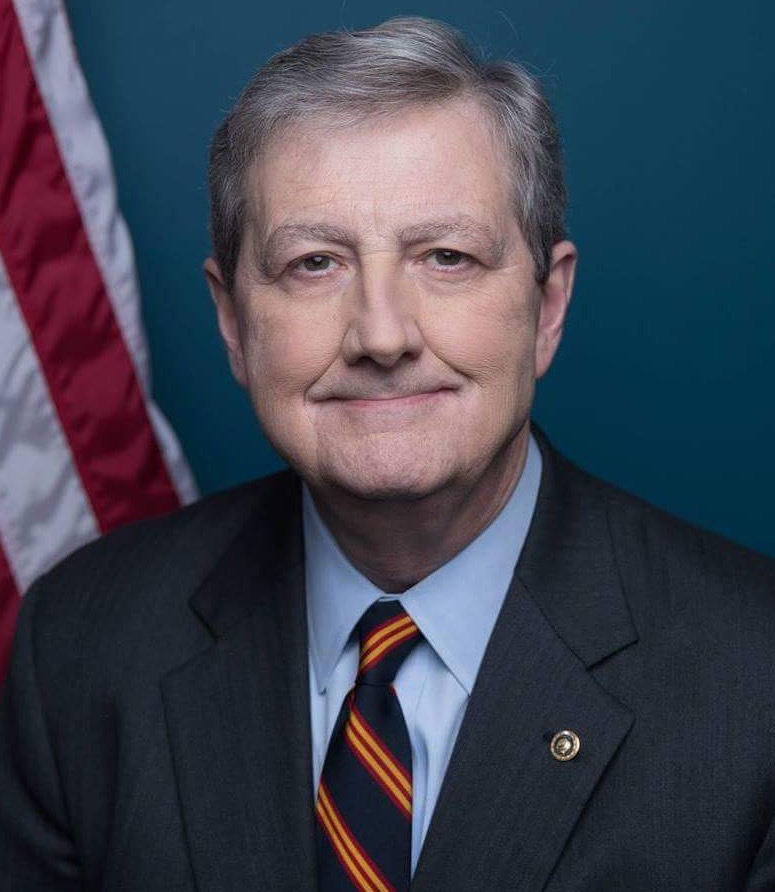
That’s what happened when John Neely Kennedy sat across from Zohran Mamdani during what was supposed to be just another tense, televised political exchange.
It began with sarcasm.
It ended with silence.
The Spark That Lit the Fuse
The debate had already been tense. Policy disagreements hung in the air like humidity before a Gulf Coast storm. Economic policy. Federal spending. Immigration. Public safety. The usual fault lines.
Then came the remark.
Mamdani, youthful and sharp, leaned into the microphone and dismissed Kennedy as “outdated and irrelevant.” The tone was dry, almost amused. A generational jab. A cultural swipe. The kind of comment that lands fast on social media and trends even faster.
Some in the studio chuckled.
Others shifted uncomfortably.
Kennedy didn’t interrupt.
He didn’t roll his eyes.
He didn’t lean forward.
He didn’t respond with heat.
Instead, he reached slowly for a piece of paper.
The Read-Aloud That Changed the Room
What happened next wasn’t dramatic in volume — but it was devastating in effect.
Kennedy began reading.
Calmly.
“Born 1997.”
“White House aide — less than a year.”
“Failed twice in Congressional campaigns.”
“A podcast with fewer listeners than a community forum in Queens.”
No shouting. No theatrics. Just measured cadence.
Then he stopped.
He looked up.
And that’s when the temperature in the room dropped.
“Baby boy,” he said evenly, “I’ve been making laws, advocating for policies, and fighting for workers before you had any national background. I’ve taken far worse blows than this — and I’m still standing. You don’t faze me.”
No applause.
No boos.
Just stillness.
Why It Hit So Hard
Political debates are usually loud. Rapid-fire interruptions. Performative outrage. Viral soundbites engineered for clips.
But this was different.
Kennedy didn’t argue policy.
He didn’t attack ideology.
He reframed experience.
To many viewers — especially older Americans — the moment felt like a reminder of generational contrast. Longevity versus momentum. Institutional memory versus insurgent energy.
To others, it felt condescending. Dismissive. A symbol of entrenched power brushing off a rising voice.
That’s why the silence mattered.
It wasn’t agreement.
It was impact.
The Generational Divide on Display
At its core, the exchange wasn’t just personal.
It was generational.
Kennedy represents decades inside the machinery of Washington — a veteran voice shaped by committee rooms, procedural rules, and political storms survived over time.
Mamdani, part of a younger political wave in New York, speaks in a language of urgency, disruption, and digital fluency.
This wasn’t just senator versus assemblyman.
It was experience versus insurgency.
Institution versus innovation.
And America watched it unfold in real time.
Social Media Erupts
If the studio froze, the internet did not.
Within minutes, clips of the exchange were circulating across X, TikTok, and Instagram. Hashtags began trending.
Supporters of Kennedy called it a masterclass in restraint.
“Calm. Controlled. Surgical.”
“That’s how you handle disrespect.”
Supporters of Mamdani pushed back.
“Condescending.”
“Classic establishment tone.”
“Boomer energy.”
The split was immediate — and telling.
In an era when viral moments can reshape political identity overnight, both men walked away with something.
Kennedy reinforced his brand: measured, dry, unflappable.

The Power of Tone in American Politics
One reason the moment resonated is because tone matters — often more than content.
American voters don’t just assess policies.
They assess posture.
Kennedy’s tone communicated durability.
Mamdani’s tone communicated impatience.
Neither is inherently right or wrong.
But together, they create tension — and tension creates headlines.
The exchange also highlighted something deeper: Americans are tired of noise. When someone doesn’t shout back, it lands differently.
Silence, when used deliberately, can feel louder than outrage.
Experience as Political Armor
For decades, Kennedy has leaned into a persona of plain-spoken sharpness. His Southern cadence, dry humor, and ability to deliver lines that sound casual but cut clean have long been part of his political identity.
Moments like this reinforce that image.
He didn’t scramble.
He didn’t overreact.
He didn’t look rattled.
In American politics, composure often equals credibility.
But credibility is subjective — and generationally fluid.
Youth as Political Momentum
Mamdani, by contrast, represents a generation that doesn’t wait its turn.
Many younger voters see seniority not as authority, but as stagnation.
To them, calling a veteran senator “outdated” isn’t disrespect — it’s an argument.
About demographic change.
About whether experience sometimes calcifies into resistance.
From that perspective, Kennedy’s response could be seen not as strength, but as gatekeeping.
And that’s the friction shaping modern American politics.
What This Moment Really Revealed
Beyond personalities, the exchange revealed three core truths about today’s political climate:
-
Generational tension is no longer subtle — it’s front and center.
-
Tone often outweighs policy in viral impact.
-
Silence can be strategic power.
The phrase “Baby boy, take a seat” (as social media paraphrased it) became symbolic not just of a jab — but of a broader cultural debate about who gets to speak, who gets to lead, and who gets to define relevance.
The Risk of Viral Politics
There’s a danger in moments like this, too.
When political exchanges become viral spectacles, nuance gets lost.
Viewers remember the line.
They forget the legislation.
They replay the clip.
They skip the policy section.
And yet, these viral moments shape perception — and perception shapes elections.

A Clash of Political Styles
Kennedy’s style: controlled sarcasm, seasoned authority, quiet precision.
Mamdani’s style: energetic critique, generational challenge, unapologetic sharpness.
Both appeal to different slices of America.
And that’s why the exchange didn’t end the debate.
It amplified it.
The Studio’s Silence
The most powerful detail wasn’t the words.
It was the reaction.
The studio didn’t erupt.
It didn’t boo.
It didn’t cheer.
It froze.
Because everyone sensed the shift.
This wasn’t just banter.
It was a boundary being drawn.
What Happens Next?
Moments like this don’t fade.
They circulate.
They get clipped.
They get memed.
They get debated on cable panels and dissected in comment threads.
But beneath the viral layer lies a serious question:
What does leadership look like in 2026 America?
Is it endurance?
Is it disruption?
Is it calm authority?
Or is it unapologetic challenge?
That question didn’t get answered on that stage.
But it was asked — loudly — through a whisper.
Final Reflection
Politics is often theater.
But sometimes, theater reveals truth.
One man spoke with the weight of decades behind him.
Another spoke with the urgency of a rising generation ahead of him.
Neither backed down.
Neither conceded.
But in one carefully delivered line, a veteran senator reminded viewers that experience, rightly or wrongly, still commands a certain gravity in American public life.
And in one sarcastic remark, a younger challenger reminded viewers that no position is beyond questioning.
The studio froze.
The internet ignited.
And America kept watching.