
When Steve Perry’s name was announced at the 2025 Grammy Awards, something unusual happened in that glittering room.
It wasn’t the kind of reaction built for television — no instant standing ovation, no thunderous roar. Instead, there was a pause. A breath. A stillness that rolled quietly across the audience like a wave no one could quite see, but everyone could feel.
Because everyone in that room understood what that moment meant.
Nearly five decades after Journey reshaped rock radio, and years after stepping away from the spotlight that once defined him, Steve Perry was being called again — not as a nostalgia act, not as a reunion headline, but as a voice that had endured.
And when he walked to the stage for Wings of Fire, he did not chase volume.
He did not chase youth.
He did not chase relevance.
He stood still.
And he sang.
The Silence Before Applause
Award shows are engineered chaos — camera cuts, scripted reactions, pre-written jokes, applause cues.
But this moment felt unplanned.
When Perry’s name echoed through the hall, you could see faces shift. Younger artists who grew up hearing his voice in their parents’ cars leaned forward. Veterans who once toured alongside him straightened in their seats.
There was recognition.
Not just of fame — but of history.
Because Perry’s voice was never just about range or power. It was about weight. The kind that gathers over time. The kind that only comes from surviving both the spotlight and the silence that follows it.
The pause before the applause wasn’t confusion.
It was respect.
“Wings of Fire”: A Song That Didn’t Need to Shout
In an era of maximal production — layered vocals, explosive lighting, stadium drops — Wings of Fire felt almost defiant in its restraint.
The arrangement left space.
And in that space, Perry’s voice lived.
He didn’t oversing. He didn’t strain to prove something. The notes rose the way they always had — from the chest, grounded and deliberate. But there was something new in the delivery.
Not fragility.
Depth.
Nearly fifty years after Don’t Stop Believin’ became an anthem of endurance, his voice still carried — but now it carried more than ambition. It carried loss. Time. Patience.
It carried memory.
The Voice That Refused to Fade
Some artists fade into tribute tours.
Some voices soften under the weight of decades.
Some disappear quietly.
Perry did something different.
He stepped away when the industry still wanted him. He chose privacy over permanence. He let the myth grow while the man stayed silent.
And when he returned, it wasn’t to reclaim a throne. It was to remind people what a voice can mean when it has lived long enough to understand itself.
That night at the Grammys, it became clear: his instrument hadn’t weakened.
It had matured.
There’s a difference.
Youth gives you volume.
Experience gives you resonance.
Perry’s voice no longer fought for the top of the note. It settled into it. Owned it. Let it bloom instead of attack.
And that control? That calm confidence?
It felt almost radical.
A Legacy Bigger Than Radio
In the late 1970s and early ’80s, Journey’s sound became inseparable from American rock culture. Stadiums filled. Radio stations looped their tracks endlessly. Perry’s vocals were the spine of it all.
But legacies are fragile things.
They can be reduced to a single hit.
They can be frozen in a single era.
The Grammy moment in 2025 reframed that narrative.
This wasn’t about reliving the past.
It was about proving that legacy doesn’t have to be loud to be alive.
The room understood that.
When the chorus of Wings of Fire swelled, you could see people close their eyes — not in nostalgia, but in absorption. He wasn’t recreating a moment from 1981.
He was creating one in 2025.
The Weight of Years
Perry has lived enough life to know what not to chase.
The industry shifts every year. Genres blur. Algorithms decide exposure. Trends rise and evaporate in weeks.
But the human voice — raw and unfiltered — remains the oldest instrument we have.
And that night, Perry treated it that way.
He didn’t layer it in spectacle.
He didn’t hide behind production.
He trusted it.
And in doing so, he trusted the audience.
The years had given him something subtle but powerful: restraint. A willingness to let silence sit before the next phrase. A refusal to rush the emotional crest of a song.
That kind of patience cannot be manufactured.
It can only be earned.
Nearly Fifty Years Later
It’s difficult to measure what nearly half a century in music really means.
Think about it.
Entire genres have been born and dissolved in that span. Vinyl gave way to cassettes, to CDs, to streaming platforms that now hold entire discographies in a palm-sized device.
And yet Perry’s voice has survived every format change.
Because format doesn’t define feeling.
The crowd at the 2025 Grammys included artists who weren’t born when Journey first hit the charts. Yet they knew. They recognized the texture. The phrasing. The unmistakable clarity.
Some voices are instantly identifiable in a single syllable.
His is one of them.
The Pause That Spoke Loudest
Perhaps the most telling moment came after the final note.
He held it — not with force, but with ease.
And when it ended, there was that pause again.
Silence, like a held breath.
Then the applause came — not explosive, but rising, steady, layered.
It felt earned.
Because this wasn’t just applause for a performance.
It was applause for endurance.
For staying true to an instrument that could have been overused, oversold, overexposed — and instead was protected.
Why It Mattered
In a culture that often prizes reinvention over constancy, Perry’s Grammy appearance felt like a reminder that some things do not need to be reinvented to remain powerful.
Authenticity ages differently.
It doesn’t wrinkle — it deepens.
The industry may change its sound every year, but audiences still respond to sincerity. To a voice that doesn’t bend itself into current shapes just to fit the moment.
That’s what made the room stand still.
It wasn’t shock.
It was recognition.

A Voice That Learned to Mean More
There’s a quiet transformation that happens to artists who live long enough to see their own mythology form around them.
They can either chase it — or step beyond it.
Perry stepped beyond it.
Wings of Fire wasn’t a declaration of dominance. It was a reflection. A meditation on time, on resilience, on carrying something forward even when the world shifts beneath you.
The younger version of Perry soared.
The present version understands.
And sometimes, understanding moves people more than altitude ever could.
More Than a Comeback
This wasn’t framed as a comeback.
It didn’t feel like one.
Comebacks imply something was lost.
What Perry showed at the 2025 Grammys wasn’t recovery — it was continuity.
His voice hadn’t disappeared.
It had been waiting.
Waiting for the right moment.
Waiting for the right song.
Waiting for a room ready to listen.
And when the moment arrived, the room didn’t erupt.
It respected.
What Endures
In the end, the image that lingers isn’t fireworks or confetti.
It’s stillness.
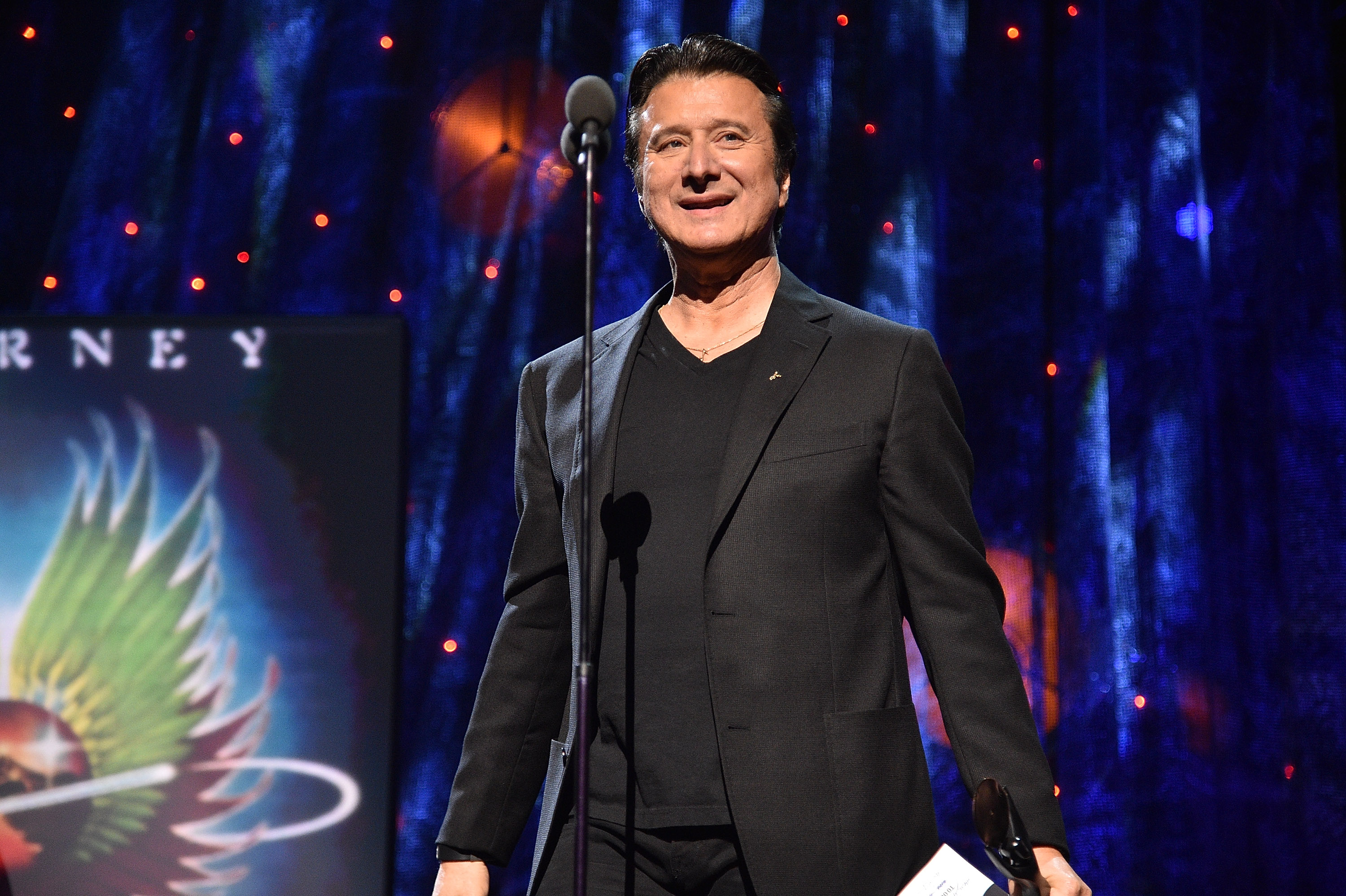
A man standing center stage, shoulders relaxed, microphone steady. A voice that once defined arenas now filling a hall without strain.
Nearly fifty years after redefining rock radio, Steve Perry proved something simple and rare:
Some artists fade.
Some voices soften.
His didn’t.
It learned how to mean more.
And that’s why, when his name was called, the Grammy crowd stood still.
Not because they were surprised.
Because they understood.