
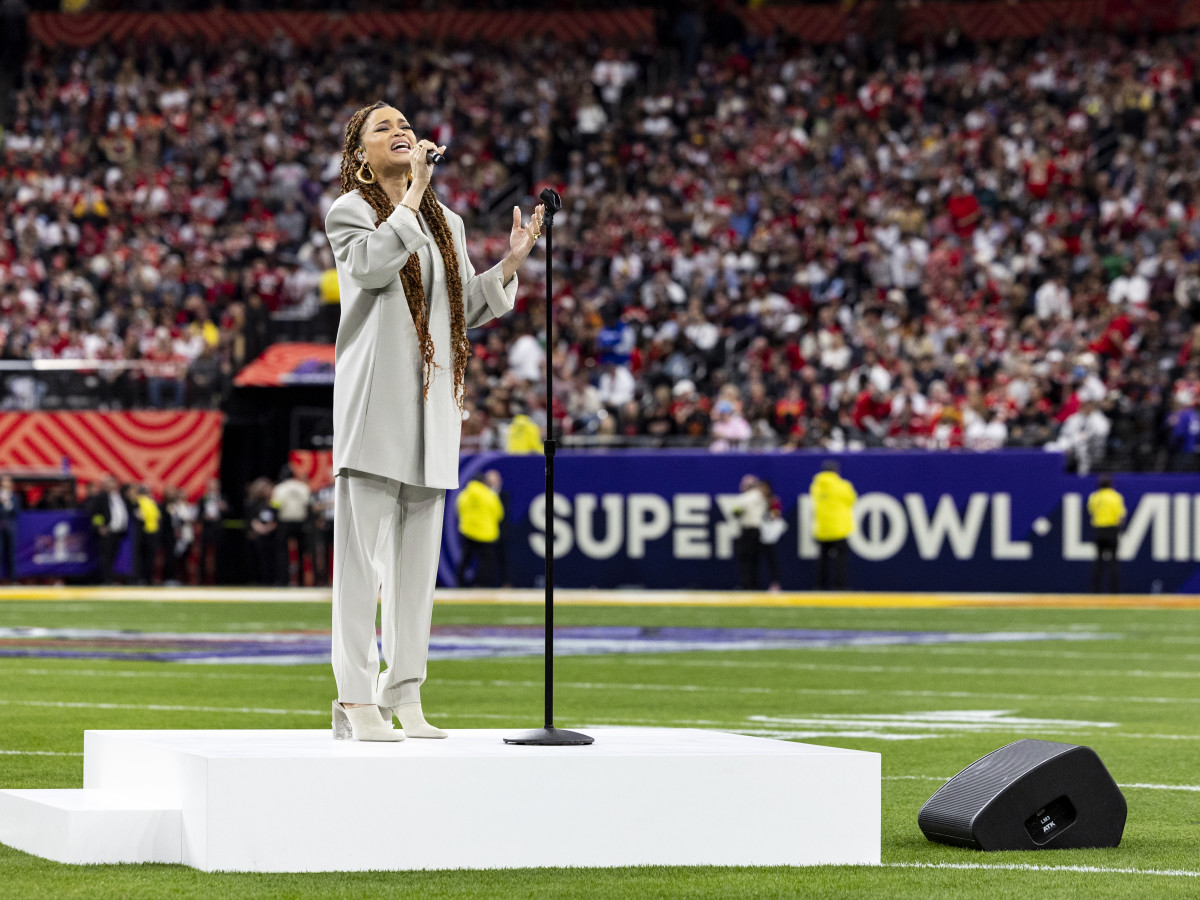
The world of sports and music collided in a monumental way on January 13, 1974, when Charley Pride, the first Black artist to achieve superstardom in the world of country music, sang the National Anthem at Super Bowl VIII. Before the era of extravagant halftime shows with fireworks, towering stages, and superstar appearances, there was Charley Pride—standing alone on the 50-yard line of a packed stadium, microphone in hand. No frills. Just his powerful voice, delivering the National Anthem and “America the Beautiful” with grace and quiet confidence.
That performance, simple yet deeply impactful, marked the first time a country artist had sung the National Anthem at the Super Bowl—a moment that would resonate far beyond the sports world. It wasn’t just about country music making its way into a mainstream event; it was about breaking down barriers and redefining what country music was capable of achieving on a grand stage.
Charley Pride: A Life Defined by Overcoming Adversity
Before Pride ever took the stage at the Super Bowl, his life was defined by overcoming significant obstacles. Born in Sledge, Mississippi, in 1938, he grew up in the segregated South, where opportunities for Black artists in country music were virtually nonexistent. While Pride was captivated by the music of legends like Hank Williams, it was a struggle for him to find a foothold in a genre that had long been dominated by white musicians. However, Pride’s talent was undeniable, and he soon became the first African American country music star.
His early years were filled with challenges—Pride worked as a sharecropper and even played professional baseball in the Negro Leagues before pursuing music full-time. His determination eventually led him to Nashville, where he broke through with his first hit, “Just Between You and Me,” in 1966. Pride’s rise to fame was not just about his incredible talent, but also about his ability to navigate a segregated industry that often turned its back on Black artists.

The Importance of Pride’s Super Bowl Performance
Charley Pride’s performance at Super Bowl VIII wasn’t just groundbreaking for the fact that it was the first time a country artist sang the National Anthem; it also represented a powerful moment in the history of American music. It symbolized the slow but steady evolution of country music, a genre that had previously been seen as reserved for a certain demographic and was not as integrated into mainstream pop culture as other genres like rock and pop.
At the time, the Super Bowl was still in its infancy as a major cultural event. The game’s halftime shows were not yet the massive productions they are today, and the National Anthem was typically performed by artists from genres like pop, R&B, and rock. By inviting Pride to perform, the NFL was not just showcasing country music; they were honoring a legend who had broken racial barriers in a deeply segregated industry.
Pride’s solo performance felt different. There was no grand spectacle—no giant stage, no pyrotechnics, just the sheer power of his voice. His rendition of the National Anthem was understated but powerful, captivating the entire stadium and television audience. It was a performance that transcended music—it was a historical moment in which Pride’s place in the cultural fabric of America was solidified. He was not just singing for a football game; he was singing for a nation, and the world took notice.
Pride’s Legacy in Country Music and Beyond
Before his performance, Charley Pride had already established himself as one of the biggest stars in country music. His hit songs, including “Kiss an Angel Good Mornin’” and “Is Anybody Goin’ to San Antone,” resonated with fans from all walks of life. He was a trailblazer, shattering expectations and paving the way for other Black musicians in a genre that had been predominantly white. Pride’s success wasn’t just due to his ability to perform; it was his authenticity that made him relatable to his audience.
Charley Pride’s career also helped to shift the narrative surrounding country music. His rise to fame helped expand the genre’s audience beyond its Southern roots and into the mainstream. In 1971, he was awarded the Country Music Association’s Entertainer of the Year Award, cementing his place as one of the most influential figures in country music history.
While Charley Pride’s Super Bowl performance in 1974 was a pivotal moment, it wasn’t the only significant moment in his career. Over the course of his lifetime, he went on to achieve numerous accolades, including induction into the Country Music Hall of Fame in 2000. He remained a beacon of perseverance and hope for aspiring musicians, proving that with dedication and hard work, barriers could be overcome, no matter how insurmountable they seemed.
The Super Bowl Stage: A Cultural Platform for Music
The Super Bowl has grown into one of the most widely watched television events in the world, and the stage at the game has become a coveted spot for artists to showcase their talents. However, it wasn’t always that way. Prior to Charley Pride’s historic performance, the Super Bowl was primarily a sports event, with the musical performances often seen as secondary. But as the years passed and the performances grew in scope and importance, the game itself became a cultural touchstone.
Charley Pride’s performance in 1974 marked the beginning of a new era for the Super Bowl. It was no longer just a platform for the biggest rock or pop stars—it was now a stage that could embrace a broader range of musical genres, including country. Over time, the National Anthem performances at the Super Bowl would become more extravagant, with pop stars like Beyoncé, Lady Gaga, and Alicia Keys making their mark. However, it was Charley Pride who first made country music a legitimate part of the Super Bowl experience.
The Lasting Impact on Country Music
In the years since Pride’s Super Bowl debut, country music has become an integral part of the entertainment landscape. From the rise of artists like Garth Brooks and Shania Twain in the ’90s to the continued dominance of country-pop crossover artists like Taylor Swift and Kacey Musgraves, country music has found a place in the hearts of millions of fans around the world.
Pride’s legacy as a country music icon continues to inspire new generations of artists who break down boundaries, both within the genre and beyond. His performance at Super Bowl VIII was a symbolic moment, but it also served as a catalyst for other country artists to follow in his footsteps and make their mark on mainstream events. Artists like Willie Nelson, Dolly Parton, and Luke Bryan would go on to sing the National Anthem or perform at the Super Bowl, further cementing country music’s place in the spotlight.
A Cultural Shift: From Charley Pride to Today’s Stars
In many ways, Charley Pride’s 1974 Super Bowl performance was a bridge between two worlds: the traditional world of country music and the mainstream, global stage of the Super Bowl. Today, country music continues to play a significant role in Super Bowl performances, from stadium anthems to halftime shows. However, Charley Pride’s quiet, humble performance will always be remembered as the moment when country music was first invited into the conversation on a national stage.
Over the years, country music has gained mainstream acceptance, and it’s no longer considered a genre that exists on the fringes of American music. From sold-out stadiums to chart-topping hits, country music continues to grow in influence, and much of that growth can be traced back to Charley Pride’s trailblazing performance in 1974.
The Legacy of Charley Pride
While his performance at the Super Bowl remains a defining moment in his career, Charley Pride’s legacy extends far beyond that day. He was a trailblazer not just for country music but for the integration of the music industry as a whole. He showed that with talent, determination, and authenticity, anyone could rise to the top, regardless of their race or background.
Pride’s story is a testament to the power of perseverance and the importance of breaking down barriers in order to create lasting change. His performance at the Super Bowl was more than just a musical performance; it was a statement that country music, and Black artists, belonged on the world stage.
Conclusion: A Pivotal Moment in Music History
Charley Pride’s performance at the 1974 Super Bowl was not just a musical milestone—it was a cultural moment that changed the way people viewed country music and the Super Bowl’s place in the American cultural landscape. His quiet, powerful performance stood as a reminder that sometimes, the most significant moments are the ones that are the simplest.
The impact of that performance is still felt today, as country music continues to be embraced by a wider audience and artists from all genres find common ground on stages across the world. Charley Pride may have been the first, but his legacy paved the way for generations of artists who would follow in his footsteps, breaking down barriers and showing that music, in all its forms, is a universal language.