
It was the moment that the world had been waiting for. The spotlight shone down on a young skater who was poised to claim victory in one of the most anticipated skating events in recent memory. Ilia Malinin, the 21-year-old American prodigy, had long been heralded as the future of figure skating. His astonishing talent had earned him a reputation as a force to be reckoned with, and the stage was set for him to deliver on that promise. But when the final score was tallied, the gold medal had slipped away—falling into the hands of Mikhail Shaidorov of Kazakhstan. For Malinin, the crushing disappointment of the loss would linger far longer than any victory ever could.
The Journey to the Skating World Stage
Ilia Malinin’s rise to fame was anything but typical. Born in the United States to a family with a strong passion for sports, he showed early promise in the world of figure skating. His natural talent, combined with a relentless drive for excellence, propelled him into the competitive circuit at a young age. It was clear from the start that Malinin was destined for greatness.
By the time he was 18, Malinin had already garnered a reputation as one of the most gifted young skaters in the world. His groundbreaking triple axels and explosive jumps had turned heads in the skating world, setting him apart from his competitors. With a blend of athleticism, artistry, and ambition, Malinin quickly became a favorite among fans and critics alike.
The Stage Was Set
The international skating community had long anticipated Malinin’s entrance onto the global stage. He had already proven himself in various national competitions, and now, it was time to take the next step. The world championship was the perfect stage for the young prodigy to make his mark. Skating alongside some of the most experienced and seasoned athletes, Malinin was ready to show the world that the future of figure skating was in his hands.
The competition itself was nothing short of intense. The stakes were high, and every skater knew that this event would be one to remember. As the crowd settled into their seats, the air was thick with anticipation. Skaters from across the globe took to the ice, showcasing their talents in what was expected to be one of the most competitive fields in recent years. Among them was Malinin, who had become the subject of much speculation. Would he finally claim the gold medal, or would the weight of the occasion prove to be too much?

A Shocking Performance
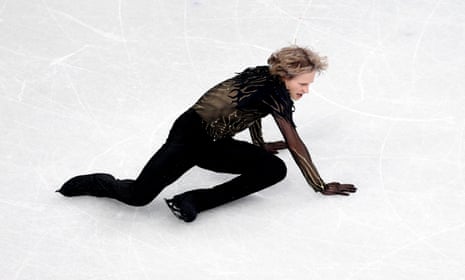
As the competition progressed, Malinin’s performance was closely watched by everyone in attendance. The young skater, known for his precision and flair, was expected to deliver an exceptional routine. He took to the ice with his usual confidence, executing his moves with the poise and grace that had earned him such acclaim in the past. However, as the routine went on, something was off. Malinin stumbled mid-performance, landing awkwardly on one of his jumps, and it was clear that something had gone wrong.
The tension in the arena grew palpable as Malinin tried to recover from the misstep. He powered through the remaining part of his routine, but the damage had already been done. The once flawless performance had been marred by a major error, and the judges’ scorecards reflected this. The crowd held its breath as the scores were tallied, and when the results were finally revealed, Malinin had dropped to a shocking eighth place—far below the expectations set for him.
The gold medal, once so within his reach, had slipped away. Mikhail Shaidorov, the unassuming skater from Kazakhstan, had claimed the top spot, while Malinin found himself facing a harsh reality. It wasn’t just the loss that stung—it was the way it had unfolded, with the potential for greatness slipping through his fingers in a matter of seconds.
Sitting on the Bench: A Moment of Vulnerability
After the event, Ilia Malinin sat on the bench, staring blankly ahead, his mind racing with a mixture of disbelief, frustration, and regret. The raw emotion was evident in his eyes as he sat there, still processing the defeat. This wasn’t just another loss; this was a moment of personal failure. As one of the most promising skaters in the world, Malinin had put everything into this competition, and now, he had come up short.
It was in this quiet, solitary moment that the young skater revealed something deeply personal: the reason behind his mistakes. “I blew it,” Malinin admitted quietly, his voice filled with a combination of sorrow and self-doubt. “I let the pressure get to me. I thought I could handle it, but I couldn’t. I let myself and everyone else down.”
The Pressure of Perfection
In the world of elite athletics, the pressure to perform is constant and unrelenting. For Ilia Malinin, this pressure was amplified by the expectations placed on him as the future of figure skating. From a young age, he had been told that he was the one to watch—that he would revolutionize the sport and lead it into a new era. As his fame grew, so too did the weight of these expectations.
The challenge of balancing such high expectations with the reality of competition is something that many athletes struggle to overcome. In Malinin’s case, his pressure came not only from external sources—coaches, fans, and the media—but also from within. His perfectionism, the drive to be flawless, had become both his greatest strength and his most significant weakness. It was this constant pursuit of perfection that ultimately led to his downfall during the competition.
The fear of failure—the dread of letting down his supporters, his team, and himself—had consumed Malinin’s thoughts in the days leading up to the event. As he prepared for the performance, the weight of this fear began to take a toll on his focus. The mistakes that followed were not the result of lack of talent or preparation—they were the result of the pressure to be perfect, a pressure that clouded his mind and led to his missteps.
The Aftermath: Coming to Terms with Defeat
As the competition ended and the spotlight shifted away from Malinin, the young skater was left to grapple with his emotions in private. The defeat had stung, but it was the moment of realization that had truly shaken him. It was the understanding that, despite his immense talent and potential, he was still vulnerable to the pressures that come with being in the spotlight.
For a long time, Malinin had prided himself on being the picture of confidence and composure. But in this moment of vulnerability, he came to understand that true strength doesn’t come from perfection—it comes from the ability to rise after failure. It was a lesson that every great athlete must learn, and for Malinin, this defeat would be his starting point.
Despite the heartbreak of the loss, Malinin’s journey was far from over. The road ahead would be filled with new challenges, but it would also be filled with opportunities for growth. He knew that in order to become the skater he aspired to be, he would have to face his fears, embrace his imperfections, and learn to cope with the pressures of the sport. The lesson learned from this defeat would become the foundation for his future success.

The Road to Redemption
In the aftermath of his defeat, Malinin made a vow to himself: he would not let this moment define him. He would rise from the ashes of his failure and return stronger than ever. The road ahead would be tough, but it was a road that he was willing to walk. For Malinin, the goal was no longer about being perfect—it was about learning from mistakes, embracing the challenges, and finding strength in vulnerability.
With each training session, each competition, and each fall, Malinin would learn the value of perseverance. The gold medal he had once so desperately wanted would no longer be the sole measure of his success. Instead, it would be the journey itself—the growth, the lessons, and the resilience—that would define his legacy in the world of figure skating.
As the world watched, Ilia Malinin would rise again, not just as a skater, but as a symbol of the human spirit—a symbol of overcoming adversity, embracing imperfection, and fighting for redemption.
Conclusion: The Power of Vulnerability
Ilia Malinin’s story is one that resonates far beyond the world of figure skating. It is a story of vulnerability, growth, and the constant pursuit of self-improvement. In a world where perfection is often idolized, Malinin’s journey reminds us all that failure is not the end—it is simply the beginning of something greater.
In the end, Malinin’s defeat did not define him—it refined him. And as he continues on his journey, the lessons learned from his most challenging moments will continue to shape the future of figure skating. For Malinin, the gold medal may have been just out of reach that day, but the true victory lies in his ability to rise again and continue chasing greatness.