PART 2
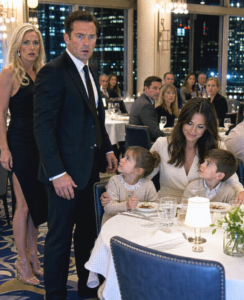
Luca stopped three feet from our table.
Up close, the changes in him were harder to ignore.
There were faint lines beside his eyes that hadn’t been there when we were married. A trace of silver touched his temples. His expression, usually so controlled that business reporters once described him as “impossible to read,” had become painfully transparent.
He looked stunned.
Not angry.
Not yet.
Just stunned.
My daughter, Maya, glanced from him to me.
My son, Miles, abandoned the complicated maze he’d been drawing on his napkin.
“Mom?” he asked.
I forced air into my lungs.
“It’s all right.”
It was the first thing I could think to say.
Luca’s gaze moved between them again.
The resemblance had always frightened me.
When they were babies, I could pretend I was imagining it. Babies changed. Their eyes changed. Their faces changed.
But at eight years old, there was no pretending.
Miles had Luca’s serious brow and the habit of studying a room before speaking.
Maya had Luca’s eyes but not his reserve. Hers were constantly alive with curiosity.
And both children had that small crease between their eyebrows whenever they were puzzled.
I had loved that crease once.
I had kissed it away from Luca’s forehead on Sunday mornings when we were young and broke and he worried about bills.
Now it belonged to our children.
Behind Luca stood Evelyn.
Her face was composed, but I saw the understanding arrive slowly.
She looked at the twins.
Then at Luca.
Then at me.
“Nia,” Luca said.
My name sounded strange in his voice after so many years.
“Hello, Luca.”
Miles leaned toward his sister.
“Do you know him?”
Before I could answer, a server approached, cheerful and completely unaware that my past had just walked directly into my present.
“Mr. Moretti, your table is ready.”
Luca didn’t even look at him.
Evelyn touched his arm gently.
“Perhaps we should give them a moment.”
His jaw tightened.
For one terrible second, I thought he might ask the question right there.
Are they mine?
Instead, something steadied in him.
Maybe it was the sight of the children.
Maybe it was the realization that whatever he needed from me, this wasn’t the place.
He looked at Maya and Miles.
“I’m sorry to interrupt your lunch.”
Maya, who had never met a stranger she couldn’t speak to, smiled politely.
“That’s okay.”
Miles merely nodded.
Then Luca looked at me.
“We need to talk.”
“I know.”
“When?”
Not here.
Not now.
Those words pressed against the back of my teeth.
“Tomorrow.”
His eyes searched mine.
“Where?”
“I’ll call you.”
His expression changed at that.
“You still have my number?”
“No.”
For the first time, Evelyn almost smiled.
Something about the ordinary awkwardness of it seemed to break the impossible tension.
She reached into her handbag, removed a small card, and placed it beside my water glass.
“My number is on the back,” she said quietly. “In case that feels easier.”
I looked at her.
There was no accusation in her face.
Only an uncomfortable kindness I hadn’t expected.
“Thank you.”
Luca glanced at her, then back at me.
“Tomorrow.”
“Yes.”
He hesitated.
His eyes returned to the twins one last time.
Then he walked away.
I didn’t breathe normally until he disappeared around the partition at the far end of the restaurant.
Maya picked up Evelyn’s card.
“Who was that?”
I took it gently from her.
“Someone I knew a long time ago.”
“Was he your friend?”
That question hurt in ways she couldn’t possibly understand.
“Yes,” I said. “Once.”
Miles studied me.
He had always noticed too much.
“Were you married to him?”
I stared at him.
Maya’s mouth dropped open.
“You were married before?”
I almost laughed.
Of all the questions I had prepared myself to answer one day, that wasn’t the one I expected first.
“Yes.”
Maya looked delighted by this historical discovery.
“Why didn’t you tell us?”
“Because it was a long time ago.”
“How long?”
“Before you were born.”
Miles looked toward the partition where Luca had disappeared.
His expression grew thoughtful.
I knew that expression.
I had seen it on Luca’s face across breakfast tables, boardrooms, airport lounges.
A mind collecting details.
“You look worried,” Miles said.
I reached across the table and covered his small hand.
“I’m surprised. That’s all.”
It wasn’t exactly the truth.
But it wasn’t entirely a lie.
That night, after the twins were asleep, I sat in my kitchen with Evelyn’s card on the table.
My house was nothing like the penthouse Luca and I had shared.
That was one reason I loved it.
It was a brick home on a tree-lined street in Lincoln Park, warm and slightly imperfect. The hardwood floor creaked near the stairs. Maya’s watercolor paintings occupied half the refrigerator. Miles had left a model airplane on the dining room sideboard even though I’d reminded him twice to move it.
This home contained life.
Mess.
Noise.
Nothing inside it had been chosen to impress anyone.
My closest friend, Dr. Simone Bennett, sat opposite me holding a mug of tea.
She had been there through everything.
The pregnancy.
The delivery.
The exhausted newborn months.
The first day of kindergarten.
Every birthday.
Every fever.
Every impossible question children asked at bedtime.
She picked up the card.
“So,” she said carefully, “the universe finally got tired of subtlety.”
I laughed despite myself.
“That isn’t funny.”
“A little bit.”
“Simone.”
She set the card down.
“What are you going to tell him?”
“The truth.”
“All of it?”
I stared at the steam rising from my cup.
“Yes.”
Simone waited.
That was one of her gifts.
She never dragged things out of people. She simply gave silence enough space for the truth to enter it.
“I thought I had more time,” I admitted.
“You always knew this day might come.”
“I knew the children would eventually ask.”
“That’s not what I meant.”
I looked at her.
She softened.
“Nia, Chicago is a big city, but Luca Moretti isn’t exactly invisible.”
Neither was I anymore.
After the divorce, I’d returned to architecture, the career I’d abandoned when Luca’s company began expanding and our fertility treatments consumed more of my life than I realized.
Slowly, I’d rebuilt myself.
Not dramatically.
There had been no miraculous transformation.
Just work.
One project.
Then another.
A small design studio.
Then larger commissions.
Eventually Carter & Rowe became respected enough that my name occasionally appeared in the same business pages as Luca’s.
We simply existed in different circles.
Until today.
“I should have told him,” I said.
Simone didn’t rescue me from the sentence.
“Yes,” she said.
The honesty stung because I trusted her.
“I know.”
“But knowing you should have done something doesn’t mean the reasons you didn’t weren’t real.”
I wrapped both hands around my mug.
Six weeks after Luca and I finalized our divorce, I had fainted in a grocery store.
I blamed stress.
Poor sleep.
Not eating.
The urgent care doctor had smiled before I understood why.
“You’re pregnant.”
I had laughed.
Actually laughed.
Then cried so hard the nurse sat beside me.
After years of tests, schedules, disappointment, and quietly breaking apart, I was pregnant.
Naturally.
Unexpectedly.
With the man who had just stopped being my husband.
I had left the clinic holding an ultrasound referral in one hand and my phone in the other.
I called Luca from the parking lot.
He didn’t answer.
I called again that evening.
Voicemail.
The next morning, I called his office.
His executive assistant told me he was in Singapore.
I said I needed to speak to him personally.
She offered to take a message.
I couldn’t say the words to a stranger.
So I wrote him an email.
Then deleted it.
I wrote another.
Deleted that too.
Finally, I sent only:
When you return, I need to tell you something important. Please call me.
He never did.
Two weeks later, I learned why.
Not because of some conspiracy.
Not because anyone had hidden the message.
Luca had changed his personal email address during a security overhaul after the divorce.
My message had gone to an old account that no one regularly monitored.
I didn’t know that then.
All I knew was silence.
By the time he returned to Chicago, I’d attended my first specialist appointment.
There were two heartbeats.
Twins.
I sat alone in my car afterward staring at the grainy ultrasound photograph.
Then I saw Luca’s photograph online.
He was at a gala.
Standing beside Evelyn Shaw.
They weren’t married then.
They might not even have been romantically involved.
But the photograph looked intimate enough to a woman who was exhausted, frightened, hormonal, and still mourning a marriage.
Something in me closed.
I told myself Luca had chosen his life.
I told myself he had been clear.
I don’t think I love you the way I used to.
I told myself I would not bring him back simply because biology had accomplished what our marriage couldn’t.
At first, I meant to wait until I felt stronger.
Then the pregnancy became difficult enough that my world narrowed to doctor’s appointments, work, and getting through each week safely.
Then the twins were born.
And everything changed.
Days became feedings.
Nights became twenty-minute stretches of sleep.
Months disappeared.
And with every month that passed, telling Luca became harder.
At one year, I thought, I’ve waited too long.
At two years, He’ll never forgive me.
At three, The children are happy.
At four, Why disrupt them?
By five, silence had become part fear, part shame, and part habit.
None of those were good reasons.
But they were human ones.
Simone looked at me.
“You’re doing it again.”
“What?”
“Trying to prosecute yourself before Luca gets the chance.”
I leaned back.
“I kept his children from him.”
“You made a decision while wounded, then became afraid to reverse it.”
“That sounds prettier.”
“I’m not trying to make it pretty.”
She reached across the table.
“You were wrong, Nia.”
My throat tightened.
“I know.”
“And Luca was wrong first.”
“That doesn’t cancel mine.”
“No. It doesn’t.”
Her hand closed around mine.
“That is precisely why tomorrow matters.”
We met the next afternoon at a small café near the lake.
Not Moretti property.
Not my office.
Neutral ground.
Luca arrived ten minutes early.
Of course he did.
He was seated in the back when I walked in, wearing a charcoal coat over a white shirt with no tie.
For a strange second, I remembered the twenty-eight-year-old man who used to meet me after work with two coffees because he could never remember whether I wanted sugar.
Then he stood.
“Nia.”
“Luca.”
We sat.
Neither of us touched the coffee.
He began immediately.
“How old are they?”
“Eight.”
His face changed.
He did the math without needing to.
“When is their birthday?”
“October twelfth.”
His eyes closed briefly.
The divorce had been finalized in January.
I discovered the pregnancy in March.
“They’re mine.”
It wasn’t a question.
“Yes.”
He looked down at the table.
I had imagined this conversation hundreds of times.
In many versions, Luca shouted.
In others, he walked away.
Sometimes I defended myself.
Sometimes I blamed him.
Reality was quieter.
He simply sat there.
When he finally spoke, his voice was rough.
“What are their names?”
“Maya Elise Carter and Miles Anthony Carter.”
His eyes lifted at the second name.
“Anthony.”
His father’s name.
“Yes.”
“Why?”
I swallowed.
“Because despite everything, I remembered how much you loved him.”
Luca looked away toward the window.
His father had died before Moretti Global became what it was now. Anthony Moretti had owned a neighborhood construction company and had once paid Luca and me twenty dollars each to paint a garage because he said we needed to learn the value of bad work before appreciating good work.
Luca rubbed a hand over his jaw.
“Do they know?”
“No.”
“That I’m their father?”
“No.”
“Do they think someone else is?”
“No. I’ve always told them their father and I separated before they were born and that I would explain more when they were older.”
He nodded once.
Then came the question I’d been dreading.
“Why didn’t you tell me?”
There was no accusation in his tone.
That made it worse.
So I told him.
Everything.
The phone calls.
The email.
The photograph.
The fear.
The twins.
The difficult pregnancy.
The months turning into years.
When I finished, Luca stared at the table.
“You emailed me?”
“Yes.”
“I never saw it.”
“I know that now.”
“How?”
“Years later, when Carter & Rowe worked with one of your subsidiaries, an old address bounced back with an automated notice. I realized what must have happened.”
His brow furrowed.
“You knew years ago that I hadn’t ignored you.”
“Yes.”
“Why didn’t you contact me then?”
Because that was the ugliest part.
“I was afraid.”
“Of me?”
“No.”
That surprised him.
“Of what, then?”
“Of everything changing.”
My voice shook.
“The twins were happy. Stable. They had school and friends and Simone and my mother. And I knew if I told you, you would want to be part of their lives.”
“Of course I would.”
“I know.”
He stared at me.
“And you thought that was a bad thing?”
“No.”
I took a breath.
“I thought it was an enormous thing.”
That quieted him.
“You don’t enter a room halfway, Luca. You never have. You build companies in six countries before breakfast. You buy buildings because you don’t like the lease terms. You solve problems by becoming bigger than them.”
His expression tightened.
“I wouldn’t have treated my children like an acquisition.”
“I know that now.”
“Did you?”
“At the time?”
I met his eyes.
“I didn’t know who you had become.”
Something passed over his face.
Pain, perhaps.
Or recognition.
“I didn’t know either,” he said.
The answer was so unexpected that I had nothing prepared for it.
Luca leaned back.
“For years, I told myself our marriage ended because we changed. Because ambition made us different people. Because wanting children had turned our home into a clinic.”
He paused.
“The truth is uglier and simpler.”
I waited.
“I was ashamed.”
“Of what?”
“Of failing.”
My eyes narrowed slightly.
He continued.
“Every appointment made me feel helpless. Every doctor told us to try something else. And instead of admitting I was scared, I began looking for an explanation that didn’t require me to feel powerless.”
My throat tightened.
“So you decided I was the explanation.”
“I allowed myself to.”
He didn’t look away.
“No one doctor told me you were infertile. No test proved it. I heard one careless suggestion from someone I trusted—that perhaps there were medical details you weren’t sharing—and I let that suspicion grow because it was easier than saying I was terrified.”
I remembered those months.
His silences.
The distance.
The way he’d begun looking at me as if a question stood between us.
“You could have asked me.”
“Yes.”
“Why didn’t you?”
“Because some part of me knew how cruel the question was.”
The café noises seemed to move farther away.
“So instead you left.”
“Yes.”
A long silence followed.
Then Luca said, “Evelyn and I have been trying for children.”
I looked at him.
“I didn’t know.”
“We kept it private.”
He turned his coffee cup slowly between his hands.
“A few weeks ago, I went through another set of tests. The doctor told me there was no fertility problem on my end.”
I felt an old wound stir.
“And you thought about me.”
“Immediately.”
His voice dropped.
“I realized I had spent years acting as though an assumption had been a fact.”
He looked at me.
“Then three days later, I walked into that restaurant.”
Neither of us spoke for a while.
Finally, I said, “I’m sorry.”
His expression tightened.
“For what?”
“For not telling you.”
“You should have.”
“I know.”
“I lost eight years.”
The sentence was quiet.
No cruelty.
No dramatics.
That made it impossible to defend against.
“Yes.”
His eyes were glassy now, though no tears fell.
“First words?”
I blinked.
“What?”
“Their first words. First steps. Starting school.”
He looked down.
“I missed all of it.”
My own eyes burned.
“Yes.”
He breathed slowly.
Then something changed.
He sat straighter.
“What happens now?”
That was the question.
Not what he deserved.
Not what I feared.
What happened now.
“I don’t want them overwhelmed.”
“Neither do I.”
“They’ve never known another father.”
He winced slightly but nodded.
“We need to tell them carefully.”
“Yes.”
“And then?”
“You get to know them.”
His eyes snapped to mine.
“If they want that.”
“They’re eight, Nia.”
“I know.”
“They can’t be responsible for making a decision this large.”
“I don’t mean they decide whether you exist.”
I shook my head.
“I mean we listen to them. We let them set some of the pace.”
Luca considered this.
“No photographers.”
I almost smiled.
“I wasn’t planning any.”
“No public statements. No Moretti family announcement. No lawyers arriving at my house with papers.”
His mouth tightened.
“I don’t want lawyers near this.”
“I mean it, Luca.”
“So do I.”
“You don’t change their school.”
“I wouldn’t.”
“You don’t send security teams to follow them.”
His eyebrows lifted.
“I wasn’t planning to.”
“You were thinking about it.”
“I was thinking about a lot of things.”
Despite myself, I laughed.
A small sound.
But real.
Luca almost smiled too.
Then his expression became serious again.
“I want a paternity test.”
The words landed harder than I expected.
Perhaps he saw it.
“This isn’t because I doubt you.”
“Then why?”
“Because eight years from now, or eighteen, I never want Maya or Miles to hear someone suggest their place in my family was based only on resemblance or an old marriage.”
He paused.
“I want the truth documented for them. Not for me.”
That was reasonable.
Still, it hurt.
“I understand.”
“I also want us to speak with someone.”
“A lawyer?”
“A family therapist.”
That surprised me again.
Luca looked almost embarrassed.
“I’ve been seeing one.”
“You?”
“I realize that apparently sounds impossible.”
“A little.”
The corner of his mouth moved.
“I’ve spent twenty years paying consultants to tell me what I’m doing wrong with companies. It occurred to me I might try the same principle with myself.”
I looked down because an unexpected laugh threatened.
When I looked up again, he was watching me with an expression I couldn’t name.
Not love.
Not yet.
Maybe memory.
Maybe grief.
Maybe something quieter.
“I don’t expect forgiveness,” he said.
“This isn’t about forgiving you.”
“No?”
“No.”
I folded my hands.
“This is about our children.”
He nodded.
“Our children.”
The words hung between us.
For the first time, spoken aloud.
That evening, Evelyn called me.
I almost didn’t answer.
But something told me I should.
“Hello?”
“Nia, it’s Evelyn.”
“I know.”
An awkward pause.
“I hope this isn’t inappropriate.”
“What is it?”
“I wanted you to know that Luca told me.”
I closed my eyes.
“All of it?”
“As much as he knows.”
“And?”
Another pause.
Then she said something I didn’t expect.
“I think you should know something about our marriage before you decide what kind of relationship he can have with the children.”
My fingers tightened around the phone.
“What?”
“We’ve been separated for four months.”
I sat down.
“You were together yesterday.”
“We had a foundation meeting and lunch afterward. We haven’t announced the separation publicly.”
I stared at the wall.
“I’m sorry.”
“Don’t be. It isn’t because of you.”
Her voice remained gentle.
“And it isn’t because we couldn’t have children.”
I didn’t know what to say.
Evelyn continued.
“Luca and I care about each other. But somewhere along the way, we realized we’d built a partnership more than a marriage.”
The phrase struck something painfully familiar in me.
“He hasn’t asked me to tell you any of this,” she added. “He doesn’t know I’m calling.”
“Then why are you?”
“Because there’s something else.”
My heart began beating faster.
“When Luca told me about the twins, I asked him whether he’d ever received any indication you were pregnant.”
I went still.
“He said no.”
“That matches what he told me.”
“I know.”
Her voice changed.
“But several years ago, when we were moving out of the old Moretti Global offices, I found a box of Luca’s personal correspondence.”
I didn’t breathe.
“There was an envelope in it addressed in your handwriting.”
My stomach dropped.
“What envelope?”
“I don’t know. It was sealed.”
“You never opened it?”
“Of course not.”
“Where is it?”
“I gave the box to Luca’s private archive.”
I stood without realizing it.
“Evelyn—”
“Nia, the postmark was from eight years ago.”
The room seemed to tilt.
I had sent no letter.
I was certain of it.
I had written dozens.
I had torn them up.
Deleted drafts.
Thrown pages into wastebaskets.
But I had mailed nothing.
“I never sent Luca a letter,” I whispered.
Evelyn was silent.
Then she said softly, “Then I think the two of you need to find out who did.”
-END OF PART 2, –PRESS NEX PART IN BOTTOM OF PAGE TO READ NEXT PART
PART 3
The envelope was found the following morning.
Luca brought it to the family therapist’s office rather than asking me to meet him at Moretti Global.
That choice mattered more than he probably realized.
Eight years earlier, Luca would have summoned people to his territory.
His office.
His boardroom.
His schedule.
This Luca sat in a comfortable gray chair beneath a framed watercolor painting while holding an old cream-colored envelope like it contained an answer neither of us knew how to face.
Dr. Helena Brooks sat between us.
She was in her fifties, calm-eyed and practical, with the air of someone who had heard every version of human regret and no longer found any of them surprising.
“The envelope is still sealed?” she asked.
Luca nodded.
“It appears to be.”
He handed it to me.
My name wasn’t on it.
His was.
Luca Moretti.
The handwriting looked like mine at first glance.
But only at first glance.
I turned it over.
The return address was the apartment I’d rented after the divorce.
My chest tightened.
“I didn’t write this.”
“You’re sure?” Luca asked.
“Yes.”
“How can you tell?”
I pointed to the capital M in his surname.
“My M doesn’t look like that.”
He stared at it.
“You remember how you wrote the letter M eight years ago?”
“I’ve been an architect for almost twenty years. Handwriting matters.”
Dr. Brooks leaned forward.
“Do either of you know anyone who might have written on your behalf?”
“No,” I said.
Then stopped.
A memory surfaced.
Not dramatic.
Not sinister.
Just small.
“My mother.”
Luca looked at me.
“What about her?”
“She stayed with me for a few weeks after I found out I was pregnant.”
“Would she have written me?”
“I don’t know.”
That wasn’t true.
I knew exactly what my mother had thought about Luca then.
She’d been furious.
Not theatrical fury.
Worse.
The quiet disappointment of a woman who had once welcomed Luca into our family and then watched her daughter return home hollow-eyed after the marriage ended.
But my mother also believed children deserved every possible connection to family.
I reached for my phone.
“I’m calling her.”
Dr. Brooks stopped me gently.
“Before you do, perhaps open the letter.”
I looked at Luca.
He nodded.
“You should.”
I slid my finger beneath the old adhesive.
Inside was one sheet of paper.
I unfolded it.
The handwriting was unmistakably my mother’s.
Luca recognized it too.
He had received birthday cards from her for eleven years.
I read silently.
Then again.
The letter was short.
Luca,
I am writing without Nia’s permission because there is something I believe you have a right to know. She is pregnant.
She is hurt, frightened, and too proud to call you again. I am not asking you to repair your marriage. I am asking you to remember that whatever happened between you and my daughter, this child did not choose it.
Please contact her.
Denise Carter.
Nothing else.
No accusation.
No plea.
No emotional speech.
Just the truth.
Luca looked at me.
“She tried.”
I swallowed.
“Yes.”
“But I never received it.”
Dr. Brooks asked, “How did it end up in your corporate archive?”
Luca stared at the envelope.
“I don’t know.”
For the first time since yesterday, suspicion entered the room.
But there was no villain waiting conveniently behind the mystery.
The answer, when we found it, was much more ordinary.
And somehow sadder.
Luca called his former executive assistant, Margaret Lin, who had retired three years earlier.
She remembered the office move.
She remembered the boxes.
And after several minutes, she remembered the letter.
“I think it arrived during the transition,” she said over speakerphone. “You were between Singapore, Zurich, and Chicago constantly that year.”
“Why didn’t I get it?”
Margaret hesitated.
“Because you gave us instructions.”
Luca frowned.
“What instructions?”
“After the divorce, you asked that personal correspondence connected to Mrs. Moretti be separated from urgent executive mail.”
My stomach tightened.
Luca went silent.
Margaret continued carefully.
“You said you didn’t want private matters interfering with the restructuring.”
I looked at him.
His face had gone pale.
“Did I say not to show me her mail?”
“No. Nothing like that. You said to hold anything non-urgent until you returned to Chicago permanently.”
“And then?”
“There was an administrative transition. Two assistants changed roles. Your personal files were boxed during the move.”
She sounded genuinely distressed.
“I am very sorry, Luca. I suspect the letter was filed instead of delivered.”
There it was.
No conspiracy.
No deliberate betrayal.
Just one instruction given by a man trying to avoid pain.
One letter written by a mother trying to correct a silence.
One office move.
One filing mistake.
Eight years.
Luca thanked Margaret and ended the call.
For a long time, none of us spoke.
Finally he looked at me.
“You did try.”
“Not enough.”
“Your mother did.”
“That isn’t the same.”
“No.”
His eyes dropped to the letter.
“But neither is the story I’ve been telling myself since yesterday.”
“What story?”
“That you simply decided I didn’t deserve to know.”
I looked away.
“Part of me did decide that.”
“Later.”
“Yes.”
“After you believed I had ignored you.”
“Yes.”
He nodded slowly.
The discovery didn’t erase my choices.
It didn’t erase his.
But it changed the shape of them.
Dr. Brooks seemed to understand that.
“You’re both looking for one moment where everything went wrong,” she said. “Perhaps there wasn’t one.”
We turned toward her.
“Sometimes relationships don’t break because of one enormous event. They break because two people stop giving each other accurate information. Fear fills the empty spaces.”
That sentence stayed with me.
Fear fills the empty spaces.
It had filled ours completely.
We told the twins on Sunday afternoon.
Simone came over beforehand, not because Maya and Miles needed protection from the conversation, but because I needed the comfort of knowing she was nearby.
Luca arrived alone.
No driver waiting visibly outside.
No flowers.
No gifts.
No attempt to turn the moment into something grand.
He wore jeans and a navy sweater.
Maya opened the door before I could.
She stared at him.
“Oh.”
Luca looked almost nervous.
It was strangely reassuring.
“Hello, Maya.”
“You remember my name?”
“Yes.”
She glanced over her shoulder at me.
“Mom, your old husband is here.”
Behind her, Miles groaned.
“Maya.”
“What? He is.”
For the first time, Luca laughed.
Not the polite sound he used at fundraisers.
A real laugh.
It transformed his face.
Maya seemed pleased with herself.
“Come in.”
He stepped inside.
Miles was waiting near the living room.
“Hi.”
“Hello, Miles.”
There was an awkward silence.
Then Miles asked, “Do you like airplanes?”
I nearly closed my eyes.
The model airplane was still on the sideboard.
Luca glanced at it.
“Yes.”
“Commercial or military?”
“Mostly commercial.”
“Why?”
“I own part of an aviation logistics company.”
Miles blinked.
“You own planes?”
“A few.”
I gave Luca a look.
He noticed.
“Mostly through the company,” he added.
Miles was already fascinated.
Maya rolled her eyes.
“This is going to take forever.”
We sat in the living room.
The twins took the couch.
I sat beside them.
Luca chose the armchair across from us.
That had been Dr. Brooks’s suggestion.
Don’t place him physically beside the children before they understand why he’s there.
Give them space.
I looked at my children.
“I told you the other day that Luca and I were married a long time ago.”
They nodded.
“There is something else I should have told you sooner.”
Miles went very still.
Maya reached for my hand.
“Luca is your father.”
Silence.
The words were finally outside me.
Real.
Maya looked at Luca.
Then at me.
Then back at him.
“Oh.”
Miles frowned.
“That makes sense.”
Of all possible reactions, I hadn’t anticipated that one.
“What makes sense?” I asked.
“Our eyes.”
Luca’s breath caught.
Miles pointed at him.
“We have the same eyes.”
“Yes,” Luca said softly. “You do.”
Maya immediately moved closer to her brother and examined him as though she had never noticed his face before.
“Mine too?”
“Yes,” Luca said.
She studied him.
“Why didn’t we know?”
There it was.
I had rehearsed my answer with Dr. Brooks.
No blaming.
No details children didn’t need.
No turning adult mistakes into a burden they had to carry.
“Because your father and I made some mistakes when we separated. We lost contact, and afterward I waited too long to tell him about you.”
Miles looked at Luca.
“You didn’t know?”
“No.”
“Not ever?”
“Not until the restaurant.”
Maya’s expression changed.
“So you weren’t ignoring us?”
Luca leaned forward slightly.
“No.”
The tenderness in his voice broke something inside me.
“I didn’t know you were here.”
Maya processed this.
Then asked, “Were you sad?”
Luca looked at me briefly.
“Yes.”
“Because you missed us?”
“Yes.”
“But you didn’t know you were missing us.”
Luca swallowed.
“Exactly.”
She nodded as if this were a complicated math problem she’d solved.
Then Miles asked the harder question.
“Are you going to be our dad now?”
Luca didn’t rush.
“I would like to get to know you.”
Miles frowned.
“That wasn’t what I asked.”
Of course it wasn’t.
I almost smiled.
Luca did.
“No. It wasn’t.”
He considered his words.
“I am your father. That part is already true. But being your dad is something I think I need to earn.”
Miles looked at him for several seconds.
Then he nodded once.
“Okay.”
Maya raised her hand.
We all stared at her.
“What?”
“Do we call you Dad?”
Luca’s eyes widened slightly.
“You can call me Luca.”
She seemed relieved.
“Good. Dad would be weird today.”
“Agreed.”
And somehow, with that, the impossible conversation became ordinary.
The paternity test came back eleven days later.
99.99 percent.
I stared at the result for a long time.
Not because I had doubted it.
Because seeing the truth printed on clinical paper after eight years of living around it was strangely powerful.
Luca didn’t frame the document.
He didn’t announce it.
He put the original in a secure family file and gave me a copy.
Then he asked if he could take the twins for ice cream.
Not Paris.
Not a private suite at a Bulls game.
Ice cream.
I said yes.
I followed separately and sat at another table with a book I didn’t read.
For forty-five minutes, Luca listened to Maya explain why pistachio was an unacceptable flavor while Miles interrogated him about jet engines.
He didn’t check his phone once.
That became our new rhythm.
Small things.
Saturday morning pancakes.
A museum visit.
A school science fair.
An afternoon at the lake.
He never arrived empty-handed after the first few weeks, but the gifts became surprisingly modest.
Books.
A model-building kit.
A set of watercolor pencils.
Once, Maya asked him why he didn’t bring “rich-people presents.”
I nearly choked on my coffee.
Luca asked, “What is a rich-people present?”
“I don’t know. A pony?”
“I live downtown.”
“You could buy somewhere for the pony.”
He glanced at me.
“I’ve been specifically instructed not to purchase real estate for livestock.”
Maya sighed.
“Mom has too many rules.”
I laughed so hard I had to leave the room.
Evelyn became an unexpected part of the transition.
She and Luca finalized their separation privately and amicably.
Three months later, they announced their divorce with a brief statement.
The business press immediately speculated.
I hated that.
So did Luca.
But neither of us commented.
Evelyn called me occasionally.
At first, the conversations were awkward.
Then less so.
One Saturday, she joined Maya and me at an art exhibition.
Maya liked her instantly.
“She’s fancy,” she whispered loudly.
Evelyn heard.
“I’ll take that as a compliment.”
“You should.”
Later, while Maya studied a sculpture, Evelyn stood beside me.
“You know he keeps their drawings in his office.”
I looked at her.
“What?”
“Luca.”
She smiled.
“Maya drew him a building with a giant ice-cream cone on top. It’s beside his computer.”
That image followed me home.
I remembered the old Luca.
The young man whose first office had been half a rented room above a plumbing supplier.
I had designed the sign myself.
MORETTI CONSTRUCTION.
The letters had been crooked because we couldn’t afford professional installation.
He’d loved it.
Somewhere between then and now, we’d both forgotten that a life could be valuable without being impressive.
The twins seemed to be reminding him.
Maybe me too.
Six months passed.
Luca became part of their lives with surprising patience.
But he and I remained careful.
We spoke about school schedules.
Dentist appointments.
Birthday plans.
Screen-time rules.
We sat beside each other at Miles’s school concert.
We disagreed about whether Maya was old enough for a phone.
We learned how to parent together without pretending we had repaired what existed between us.
Then one Wednesday evening, Luca came to my house after the twins were asleep.
He looked unsettled.
“What happened?”
“Nothing bad.”
That phrase never calms anyone.
“Then what?”
He handed me a folder.
I opened it.
Inside were copies of documents from the fertility clinic we’d used during our marriage.
I looked up.
“Why do you have these?”
“I requested my old records.”
“Why?”
“Because I couldn’t stop thinking about something.”
My stomach tightened.
“What?”
“The assumption.”
He sat across from me.
“Why did I become so convinced the problem was you when every test we underwent had been inconclusive?”
I remembered.
“We were told stress could be a factor.”
“Yes.”
“And timing.”
“Yes.”
“And that unexplained infertility happens.”
“Yes.”
He tapped one document.
“But look at this.”
I read it.
A lab report.
Then another.
Nothing immediately stood out.
“What am I looking for?”
“Dates.”
I compared them.
One test had been recorded nearly a month after I remembered taking it.
“So?”
“I called the clinic.”
“Luca—”
“I didn’t accuse anyone. I asked for clarification.”
He slid another page toward me.
“The fertility specialist we worked with retired five years ago. Their system was migrated twice.”
“And?”
“One of our reports was entered under the wrong patient profile.”
I stared at him.
“What does that mean?”
“It means one result we thought belonged to you may not have been yours.”
My pulse quickened.
“Which result?”
“The ovarian reserve test.”
I remembered that one.
I remembered sitting in the car afterward while Luca took a conference call.
I remembered the nurse saying my numbers were lower than expected.
Not catastrophic.
Not definitive.
But concerning.
It had been the first moment I privately wondered whether my body was failing us.
Luca’s voice softened.
“That result may have belonged to another patient.”
I stared at the paper.
“So for years…”
“We don’t know yet.”
He was careful.
“We know only that there was a records discrepancy.”
I put the folder down.
My hands were shaking.
Luca watched me.
“Nia.”
“I built half my life around those numbers.”
“I know.”
“No.”
My voice broke.
“You don’t.”
He didn’t argue.
That helped.
I got up and walked toward the window.
For years, I had told myself the past didn’t matter.
We had the children.
We were healthy.
We were happy.
But suddenly I was thirty-three again under fluorescent lights, trying not to cry while a nurse explained percentages.
“I thought something was wrong with me.”
Luca stood but didn’t approach.
“So did I.”
I turned around.
“And maybe nothing was.”
His expression was filled with regret.
“Maybe.”
The word settled between us.
Then he said, “There’s more.”
I stared at him.
“What more?”
“The clinic located our complete archived file this morning.”
My heart beat once, hard.
“They found a note from our specialist.”
“What note?”
“He recommended repeating both of our tests before drawing conclusions.”
I frowned.
“We never did.”
“No.”
“Why not?”
Luca’s face changed.
He looked almost ashamed.
“Because I canceled the appointment.”
The room went silent.
“You?”
“Yes.”
“Why?”
He looked at me.
“Because it was scheduled the week I decided to leave.”
I could barely speak.
“So there was never a medical conclusion.”
“No.”
“No proof.”
“No.”
“And we both lived as though there was.”
“Yes.”
I sat slowly.
The tragedy of it wasn’t that someone had deceived us.
It wasn’t that there had been some malicious plan.
It was simpler.
We had stopped one appointment too soon.
Stopped one conversation too soon.
Stopped trusting each other one season too soon.
Luca looked down at the papers.
“There was one more note.”
I almost didn’t want to hear it.
“What?”
He handed me the final page.
The handwriting was difficult to read, but one sentence had been typed beneath it during digitization.
Recommend continued attempts at natural conception. Prognosis remains favorable.
I read it twice.
Then a third time.
Luca’s voice was quiet.
“We may never have been unable to have children at all.”
I looked at him.
Outside, Chicago glowed beyond my windows.
Eight years of silence stood between us.
But for the first time, the silence didn’t feel empty.
It felt like a space where something new could finally be said.
The question was whether either of us was brave enough to say it.